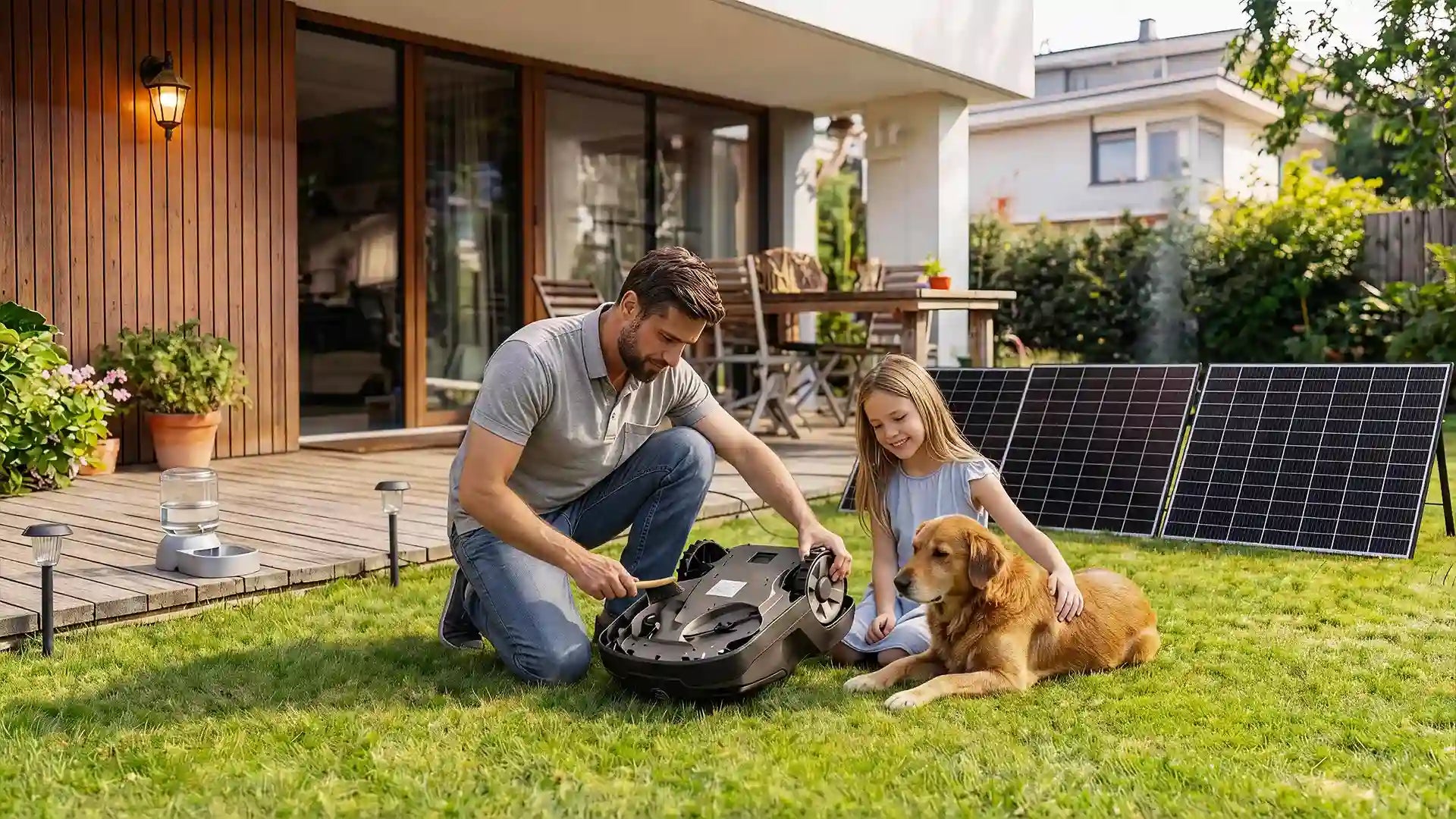

Every summer, homeowners across North America see the same problem: electricity bills rise sharply as temperatures climb. Air conditioning systems run longer, refrigerators work harder, and peak utility pricing often pushes costs even higher during the hottest hours of the day.
For many households, the goal is not to completely replace air conditioning with solar. The more realistic and cost-effective strategy is using solar backup for home cooling to reduce grid dependence during expensive peak hours, lower energy pressure, and keep essential cooling appliances running more efficiently.
This guide explains how solar can help reduce summer electricity bills, which appliances should be prioritized, and what level of savings homeowners can realistically expect.
Why Summer Electricity Bills Increase So Much
Summer energy costs are driven by two factors:
1.Higher cooling demand
2.Peak electricity pricing
In many U.S. states, air conditioning can account for 40%–60% of total household electricity use during summer months. Central AC systems typically consume between:
2,000W–5,000W while running
More during startup surges
At the same time, many utilities apply Time-of-Use (TOU) pricing. Electricity becomes significantly more expensive during peak afternoon and evening hours, usually between:
4 PM – 9 PM
When outdoor temperatures remain high
When neighborhood grid demand spikes
This means homeowners are paying the highest rates exactly when cooling systems consume the most power.
That is where summer electricity bill solar strategies become valuable.
What Solar Backup Does Best During Summer
A properly sized solar backup system is most effective at:
Reducing expensive daytime grid usage
Offsetting partial AC consumption
Powering essential cooling appliances
Supporting “peak shaving”
Lowering overall electricity demand from the grid
Rather than attempting full off-grid cooling for an entire house, most homeowners achieve better ROI by targeting high-impact loads strategically.
This approach is commonly called peak shaving.
What Is Peak Shaving?
Peak shaving means reducing electricity consumption during the most expensive utility pricing periods.
Instead of drawing full power from the grid during late afternoon heat, a solar backup system can supply part of the load using:
Solar panels
Battery storage
Hybrid inverter systems
For example:
Solar panels generate power during the day
Batteries store excess solar energy
Stored power supports cooling appliances during peak-rate hours
This helps reduce costly peak-hour electricity purchases.
Which Cooling Appliances Should Be Prioritized?
Not every appliance needs to run on solar backup. Prioritizing the right loads improves efficiency and system affordability.
1. Fans and Air Circulation Devices (Highest Efficiency)
Ceiling fans and portable fans consume relatively little power while significantly improving indoor comfort.
Typical power consumption:
|
Appliance |
Typical Wattage |
|
Ceiling fan |
30W–75W |
|
Box fan |
50W–100W |
|
Tower fan |
40W–80W |
Running fans alongside moderate AC settings can reduce cooling demand substantially.
For example:
Raising thermostat settings from 72°F to 76°F
While using ceiling fans
Can noticeably reduce AC runtime
Fans are one of the easiest loads for solar systems to support continuously.
2. Refrigerators and Freezers (Essential Load)
Refrigerators operate 24/7 and work harder during summer due to higher ambient temperatures.
Typical energy use:
|
Appliance |
Daily Consumption |
|
Standard refrigerator |
1–2 kWh/day |
|
Garage refrigerator |
2–4 kWh/day |
A solar backup system can reliably offset refrigerator loads during daylight hours, especially when paired with battery storage.
This is particularly valuable during:
Heat waves
Rolling blackouts
Utility peak pricing periods
3. Portable AC Units and Mini Split Systems
Not all air conditioning systems consume the same amount of energy.
Portable AC Units Typical draw:
700W–1,500W
Mini Split Air Conditioners Typical draw:
500W–1,500W
Depending on room size and inverter efficiency
Modern inverter mini splits are often far more compatible with solar for cooling applications than traditional central AC systems.
Instead of cooling an entire home, homeowners can cool:
1. One bedroom
2. A home office
3. Living spaces during occupied hours
This zoning approach dramatically reduces power demand.
4. Central Air Conditioning (Partial Offset Strategy)
Central AC systems are usually too energy-intensive for small solar backup systems to fully support continuously.
However, solar can still reduce costs by:
Offsetting daytime compressor operation
Supporting blower fans
Reducing total grid draw
Lowering peak-hour utility usage
A hybrid system may cover part of the load while the grid supplies the remainder.
This is often the most practical approach for suburban homes.
5. Dehumidifiers (Often Overlooked)
Humidity makes homes feel hotter even when temperatures remain moderate.
Typical dehumidifier usage: 300W–700W
Reducing indoor humidity can:
Improve comfort
Reduce AC runtime
Lower overall cooling costs
In humid climates such as:
Florida
Texas Gulf Coast
Southeastern U.S.
dehumidifiers can be an effective supplemental cooling strategy.
Which Household Loads Can Solar Realistically Cover?
The answer depends on:
Solar array size
Battery capacity
Sunlight conditions
Appliance efficiency
Regional climate
Here is a practical estimate for partial summer cooling support.
Example: Moderate Solar Backup Setup
System Example
2.5kW solar array
5kWh battery storage
Hybrid inverter
Possible Daily Coverage
|
Appliance |
Approximate Runtime |
|
Refrigerator |
Full day support |
|
Ceiling fans |
8–15 hours |
|
Wi-Fi + electronics |
Full day |
|
Portable AC (small room) |
2–5 hours |
|
Mini split AC |
Partial daytime operation |
|
Dehumidifier |
Several hours |
This type of setup is often sufficient for:
Peak shaving
Emergency backup
Reducing summer electricity pressure
But not for running:
Large central AC systems continuously
Multiple high-load appliances simultaneously overnight
How Much Can Solar Reduce Summer Electricity Bills?
Savings depend heavily on:
Utility rates
Cooling habits
Climate zone
System size
Battery usage patterns
Below are realistic scenario-based estimates.
Scenario 1: Moderate Climate Household
Home Profile
Small suburban home
Fans + refrigerator + partial AC support
2–3 person household
Potential Savings
$40–$90/month during summer
This usually comes from:
Reduced daytime grid consumption
Lower peak-hour usage
Scenario 2: Hot Climate With Time-of-Use Pricing
Home Profile
Arizona, Nevada, Texas, or California
Heavy afternoon AC usage
Battery-assisted peak shaving
Potential Savings
$100–$250/month during peak summer months
Especially when:
Batteries discharge during expensive utility periods
Solar offsets daytime cooling demand
Scenario 3: Zoned Cooling Strategy
Home Profile
Mini split cooling one occupied room
Solar supports targeted cooling only
Potential Savings
20%–40% reduction in cooling-related electricity costs
Compared to cooling an entire house with central AC.
Why Appliance Efficiency Matters More Than System Size
One of the biggest misconceptions is that larger solar systems automatically solve cooling costs.
In reality, efficient appliances often produce better financial returns.
Examples include:
Inverter mini splits
ENERGY STAR refrigerators
DC fans
Smart thermostats
Improved insulation
Reducing cooling demand first allows solar systems to perform far more effectively.
Best Practices for Using Solar for Cooling
Use Cooling During Solar Production Hours
The best time to operate cooling appliances is:
Late morning through afternoon
When solar generation is highest
This minimizes battery cycling and grid dependence.
Combine Solar With Smart Thermostat Settings
Instead of aggressively cooling the home:
Maintain stable temperatures
Reduce large afternoon temperature spikes
This lowers compressor workload.
Prioritize Critical Rooms
Cooling:
Bedrooms
Home offices
Living rooms
is often more efficient than whole-home cooling.
Pair Solar With Battery Storage
Battery storage improves:
Peak shaving performance
Backup reliability
Evening cooling support
Especially during:
Heat waves
Grid instability
Utility peak pricing
Is Solar Backup Worth It for Summer Cooling?
For most homeowners, yes — when expectations are realistic.
Solar backup works best as:
A bill reduction strategy
A peak shaving solution
A resilience upgrade
A way to support essential cooling loads
It is usually not intended to fully replace grid-powered central air conditioning 24/7 unless paired with a very large and expensive solar-plus-storage system.
The most cost-effective approach is often:
Partial load coverage
Efficient appliances
Strategic cooling habits
Battery-assisted peak-hour reduction
Final Thoughts
Summer cooling costs are becoming a major household expense, especially in regions with rising electricity rates and Time-of-Use pricing.
A well-designed solar backup for home cooling system can help homeowners:
Reduce peak-hour electricity costs
Support essential cooling appliances
Improve comfort during heat waves
Lower long-term utility dependence
The key is understanding that solar is most effective when used strategically — not as an unlimited replacement for every household load.
For many households, even partial cooling support can produce meaningful savings during the hottest months of the year.