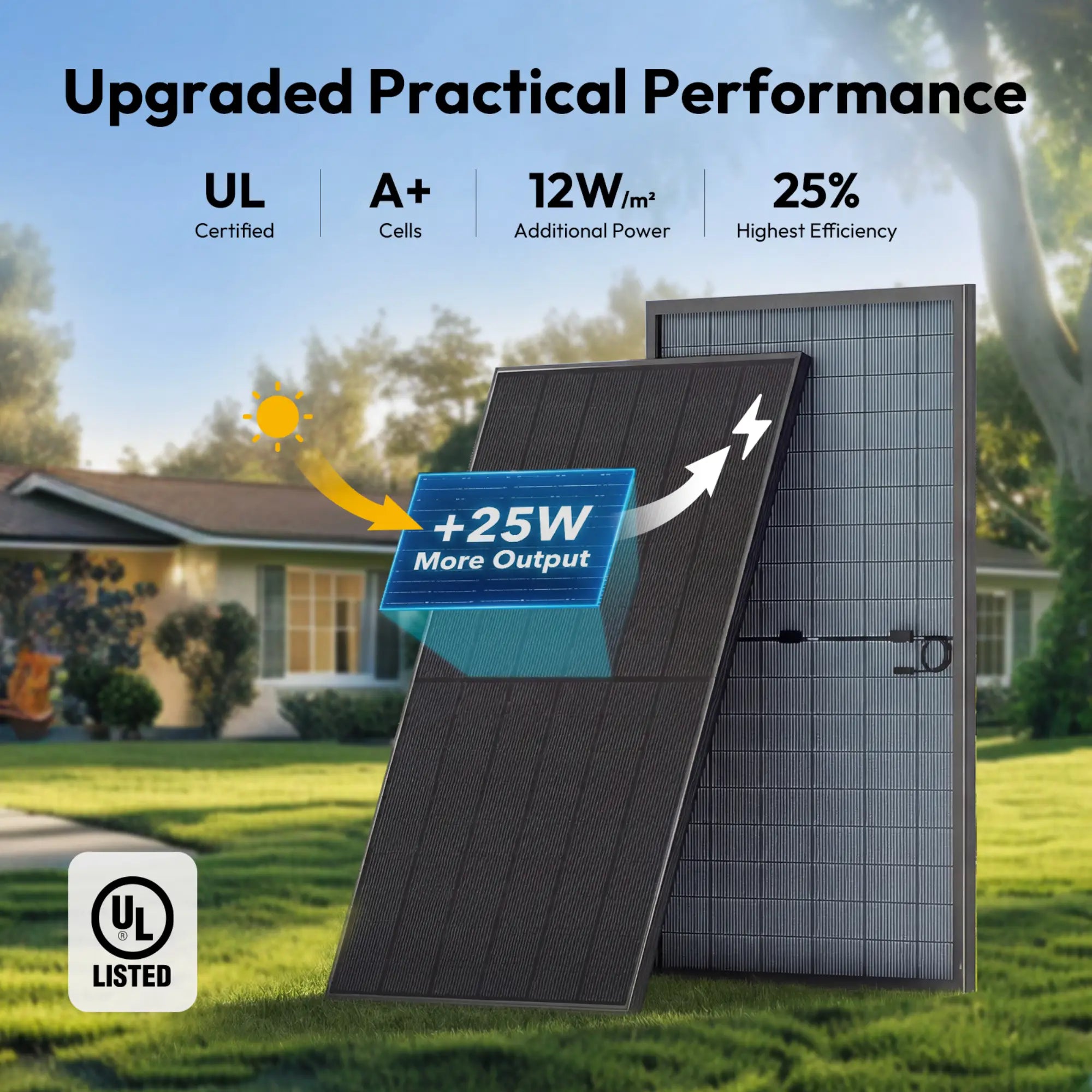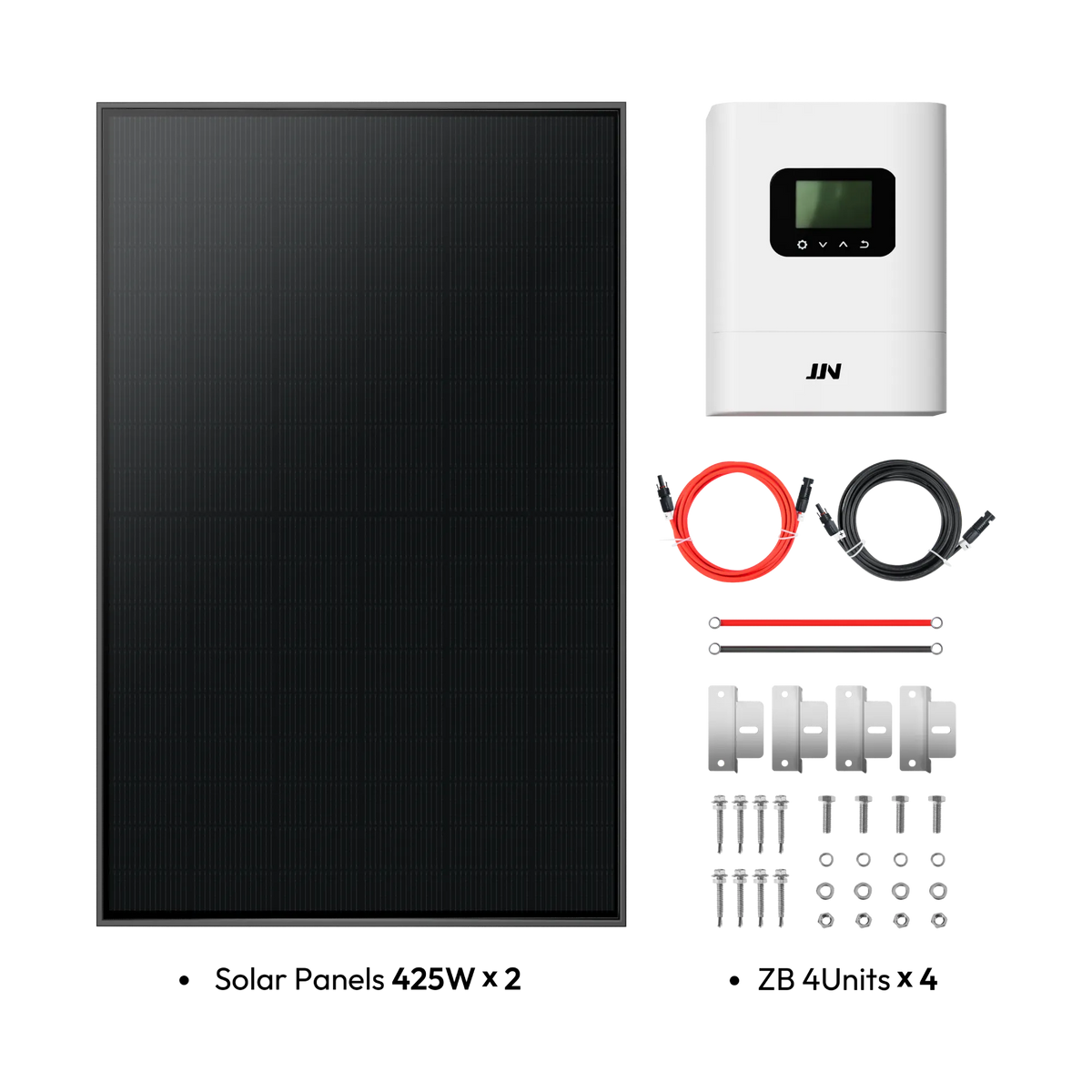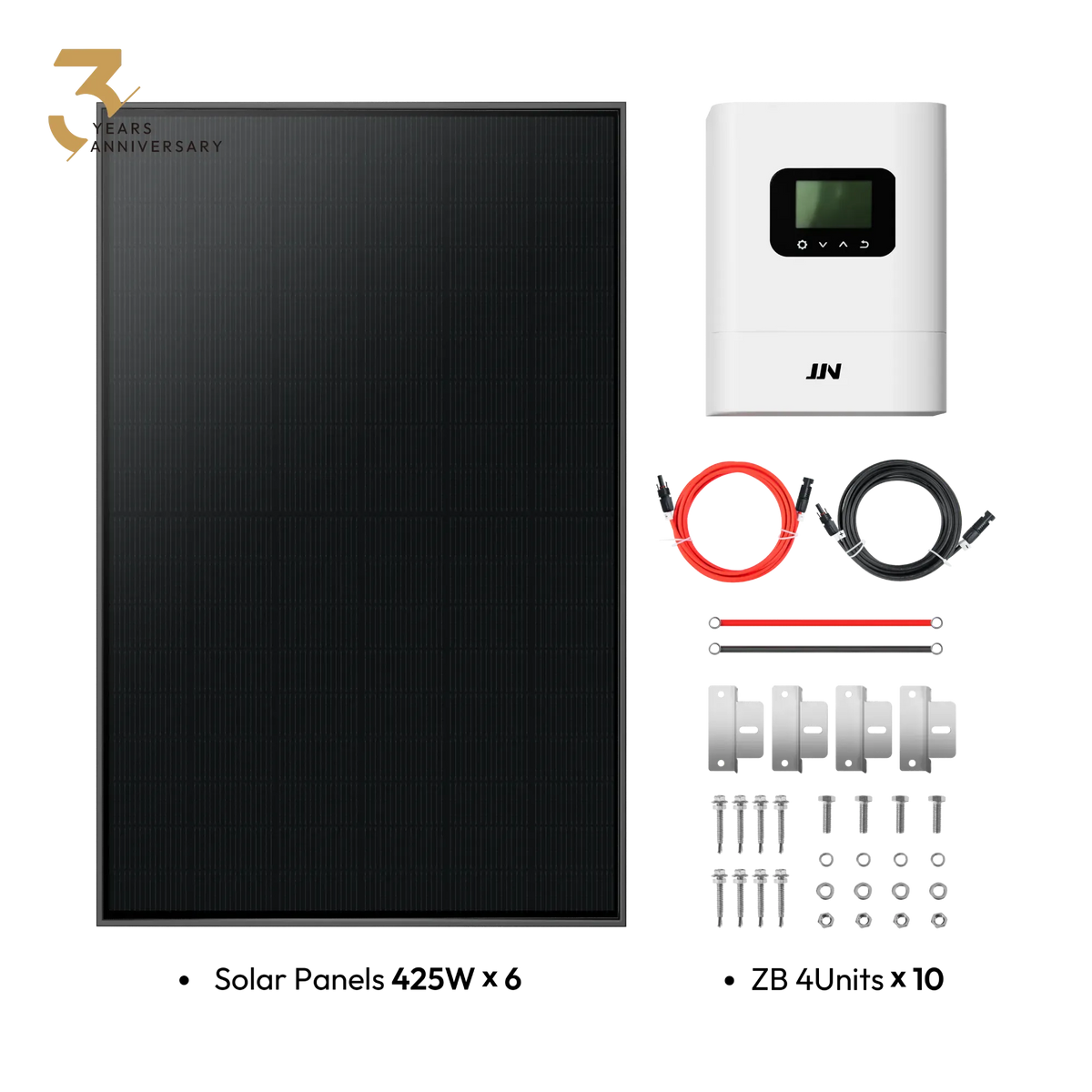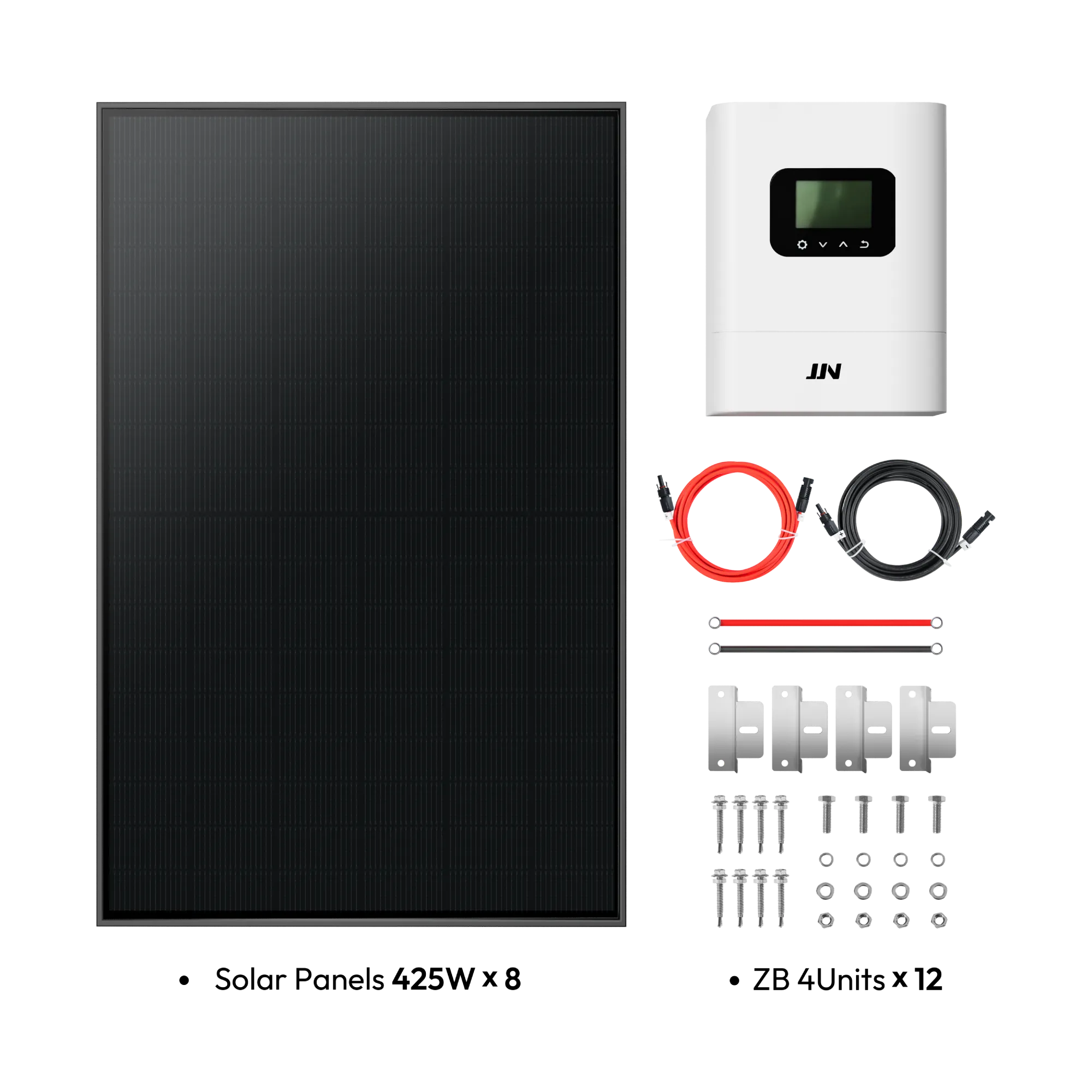


More convenient. More efficient.
Still using long extension cords for outdoor power?
Running low on electricity during parties?
Frequent power outages at your remote farm?
No need to overcomplicate things—simply equip yourself with our energy solution system to resolve all these issues.


Why a Backyard-focused Solar System?
Clean installation — fewer messy extension cords and visible generators; neat fixed panels or integrated micro-panels keep the yard tidy.
Always-on local power — run lights, security cameras, doorbells, smart locks, pet feeders and charge battery-driven tools without running long cables.
Scalable — start small (yard devices) and grow to a shed/workshop system or a full carport EV charger over time.
Find Out Your Customized Solution
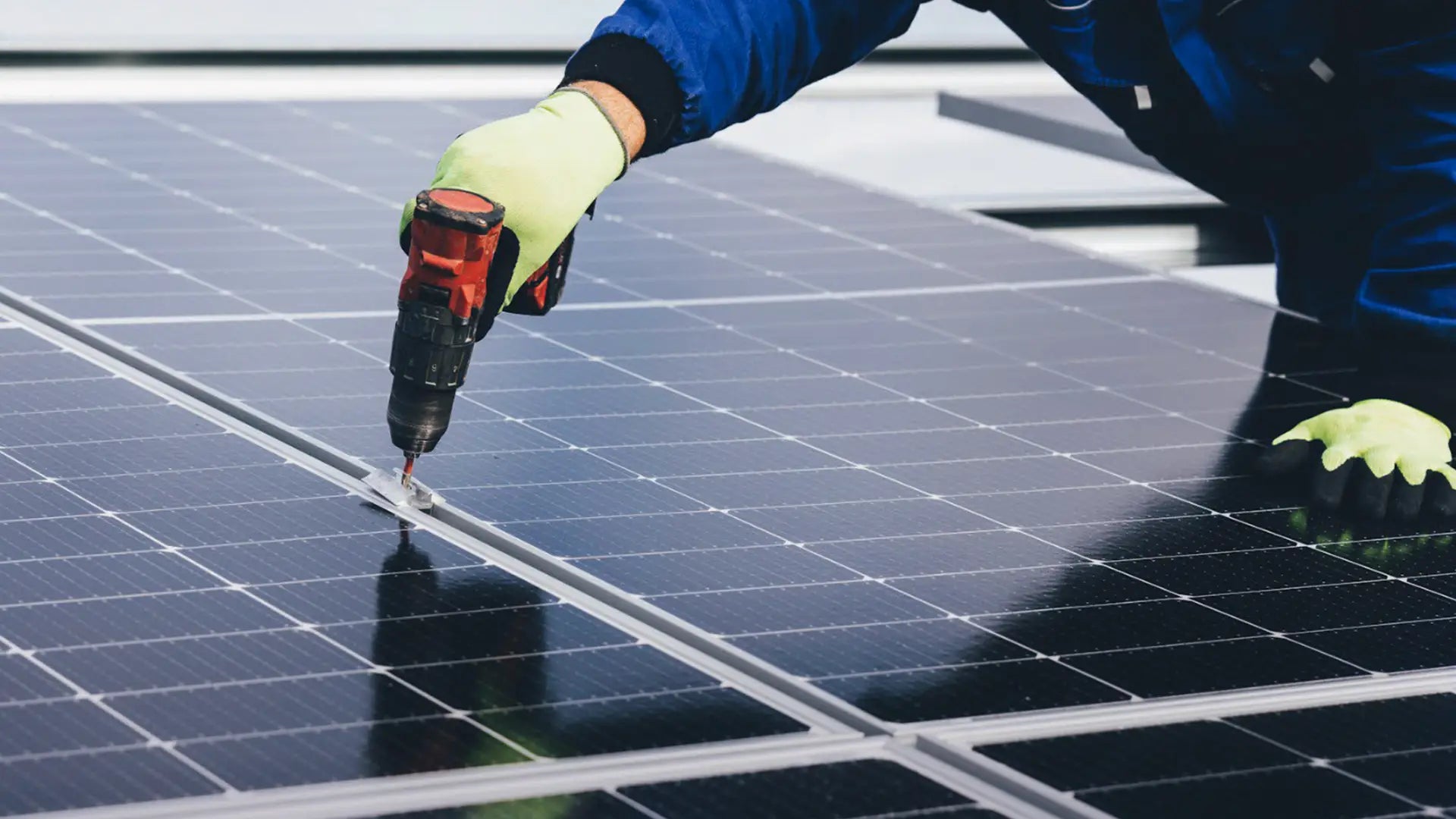
Easy Installtation
Save Money
Energy Independence
Eco Friendly


“Plug-and-forget” Small Systems (path lights, cameras, doorbells, feeders)
Best for: pathway/landscape lighting, Wi-Fi cameras, smart doorbells, smart locks, pet feeders and occasional powering of small appliances.
Key benefits:
Minimal wiring — use small solar panels or distributed micro-panels at fixtures, or a compact centralized panel + battery hidden in a box.
Low maintenance and low cost to install.
Continuous small-load power (security camera, doorbell) without running mains wiring across the yard.
“Keeps your yard tidy — no extension cords across the lawn.”
“Power cameras and smart devices 24/7 with a small solar + battery system.”
“Option: per-device micro-panels for truly cordless cameras and doorbells.”
Typical setup (example, city/suburban North America):
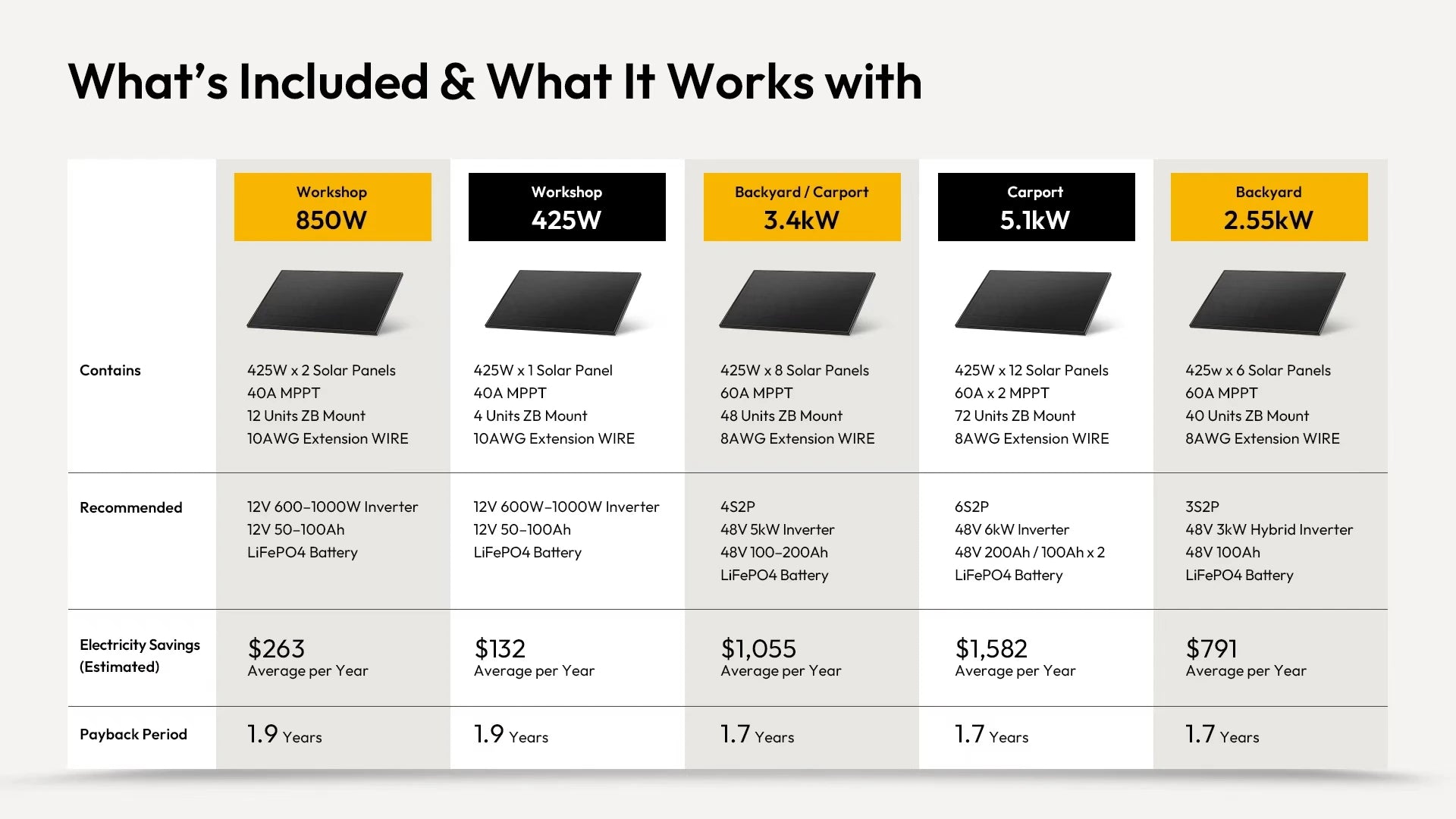
Panel: 100–200 W rooftop/pole-mounted module (one or more panels). A 100 W panel typically yields ~300–600 Wh/day depending on location/peak sun hours — useful baseline for sizing.
Battery/Power Station: 1,000–2,000 Wh (1–2 kWh) usable (or a portable power station such as Jackery / Goal Zero).
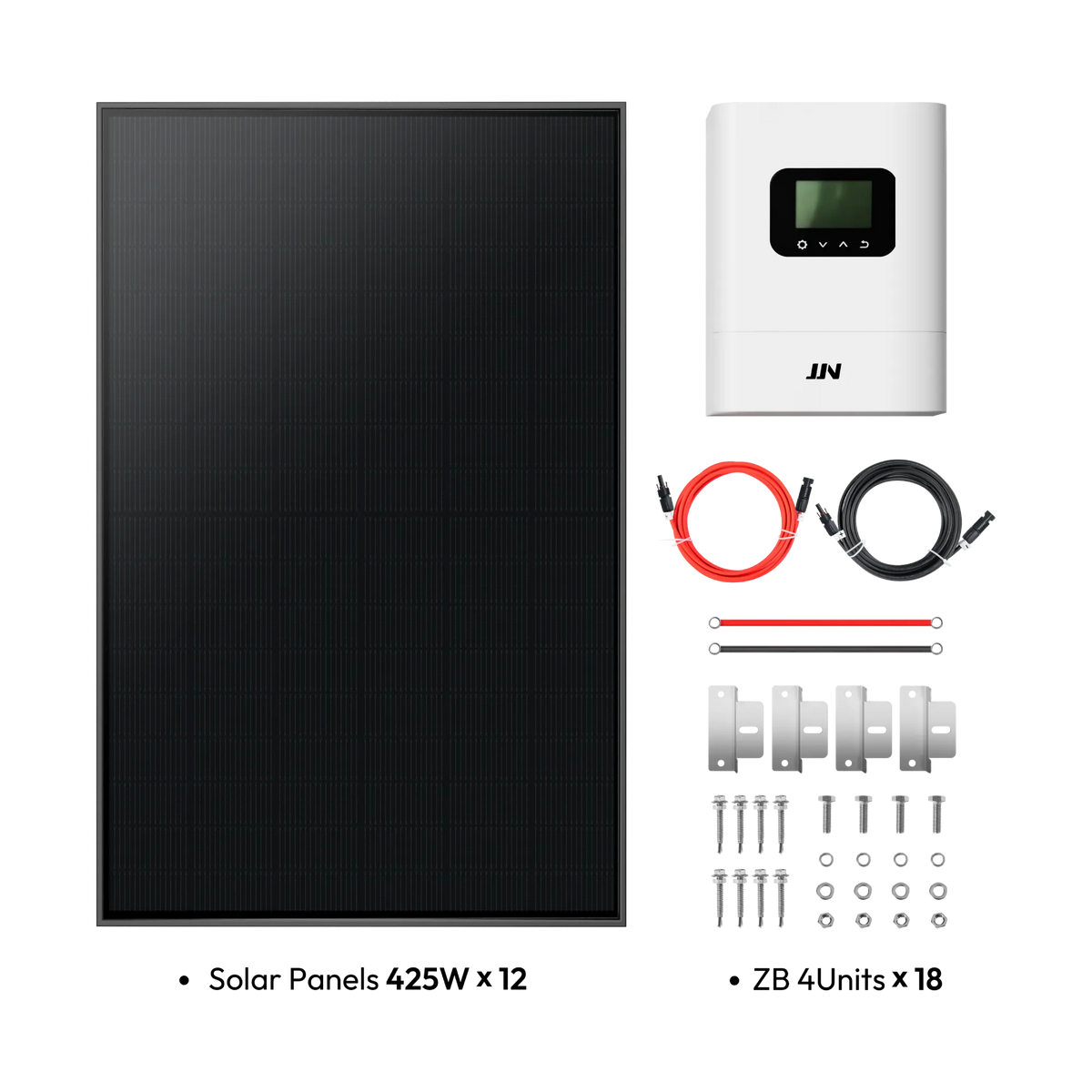
Charge controller: MPPT 12/24 V.
Inverter: small pure-sine 300–1500 W (if you need AC outlets).
Mounting: low pole, wall or ground mount; integrate micro-panels for cameras/doorbells when feasible.
Example calculation: Security camera 5 W continuous → 5 W × 24 h = 120 Wh/day. (5 × 24 = 120). A 100 W panel with ~4 peak sun hours produces about 100 × 4 = 400 Wh/day, enough to support several cameras + LED pathway lights on moderate days. (100×4=400).

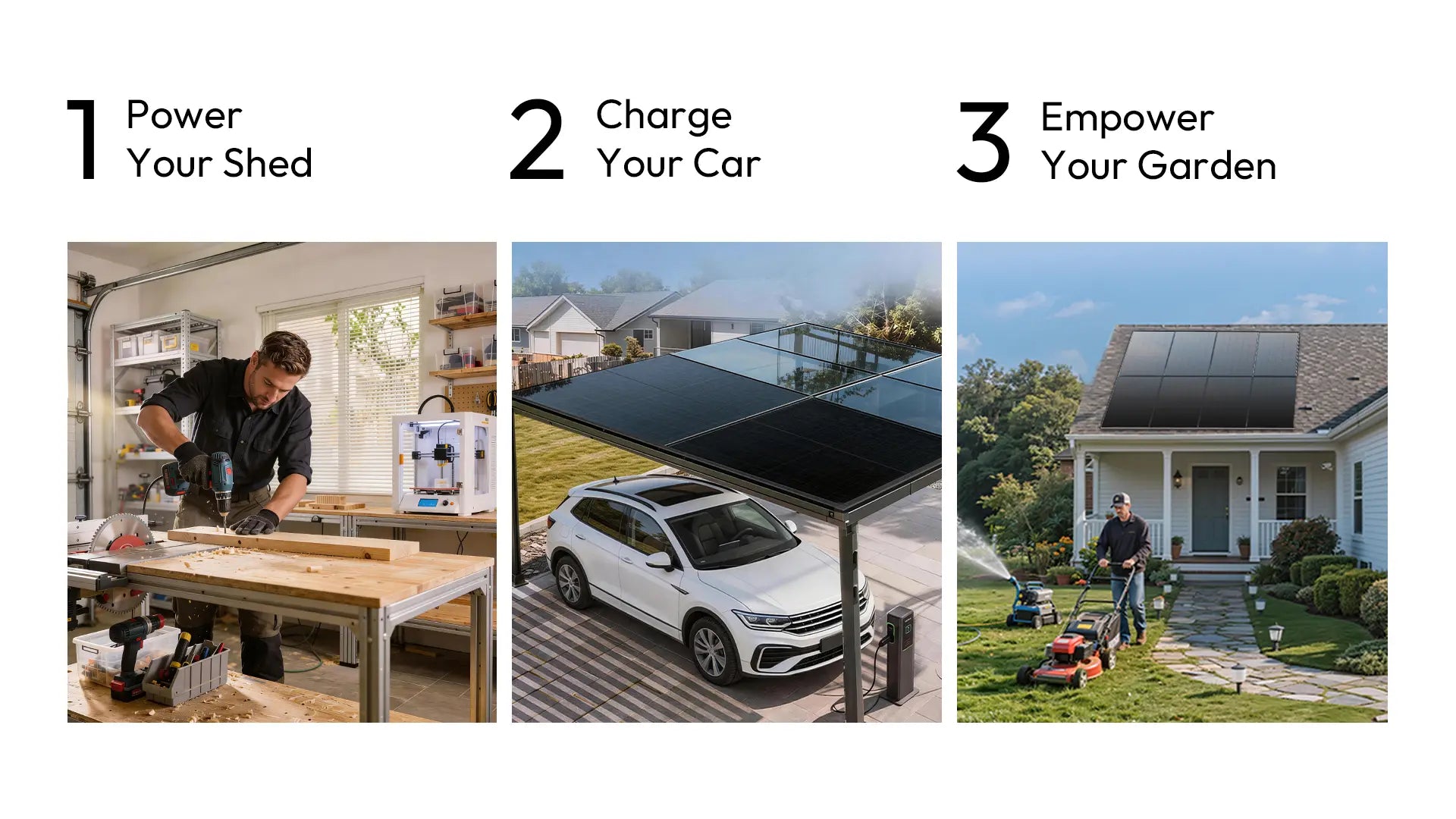
Tools / Workshop (shed or garage) — “DIY + Heavy-use Tools”
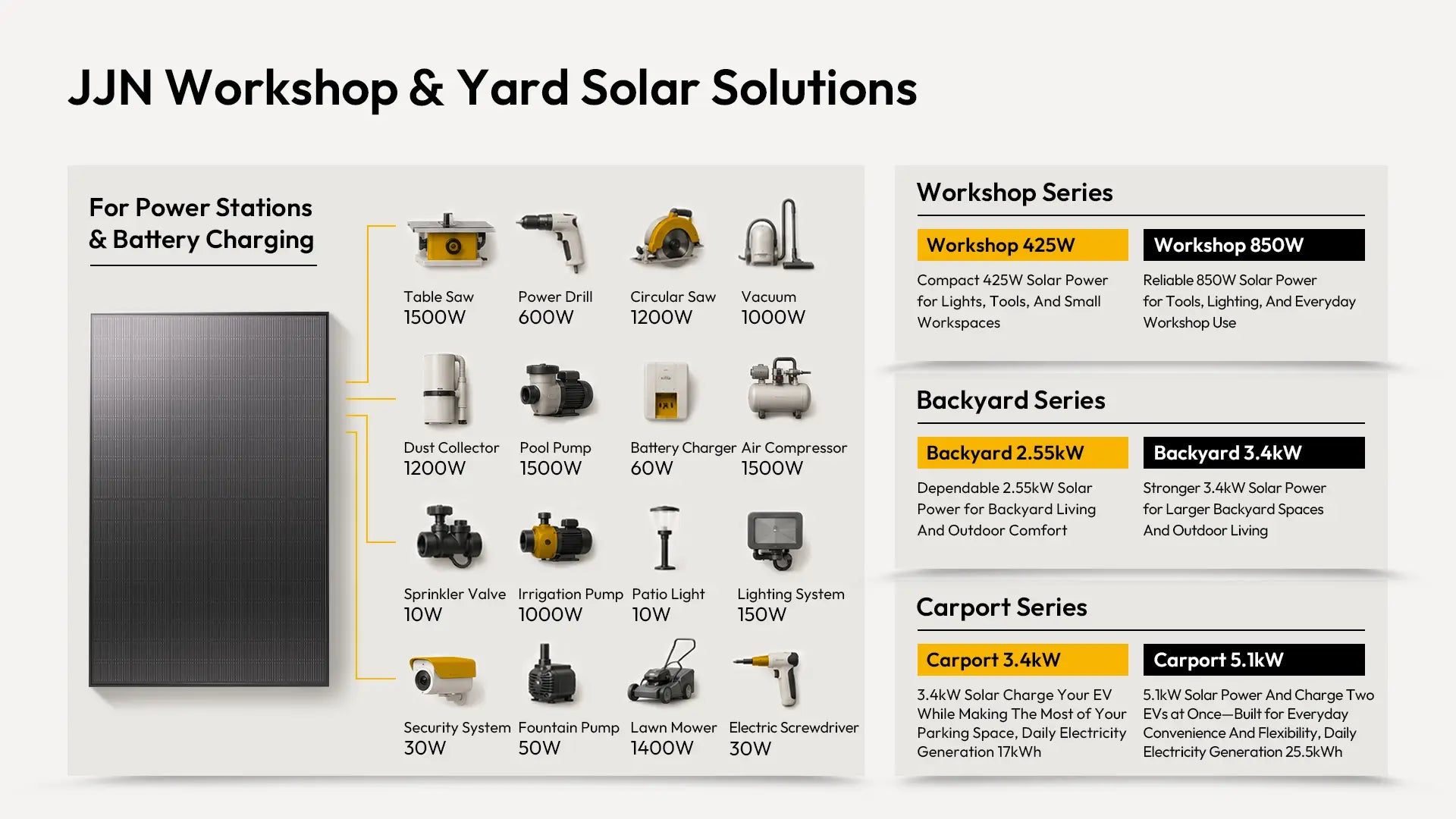
Best for: homeowners who workshop — charge drills/18–40 V tool packs, run bench tools, lights, small compressors, battery chargers.
Why this matters: Many North American DIYers want localized, dependable power near their bench or shed rather than running long extension cords from the house. With the right battery and inverter, you can charge multiple tool batteries and run bench equipment.
“Dedicated tool-battery charging bay — charge multiple packs from a single battery bank.”
“Install a 120/240 V sub-panel in the shed for higher-power bench tools.”
“Expand later: add more panels or a second battery module.”
Typical setup (example):
Panel array: 500 W – 2 kW array (depends on how many tools and how often).
Battery bank: 3 – 10 kWh usable (Li-ion or LFP recommended for cycle life).
Inverter: 2 kW – 5 kW pure-sine (sufficient for chargers and bench tools).
Charge controller: MPPT sized to array.
Sub-panel + outlets in the shed; dedicated tool battery charging station.
Feasibility note: Service providers and manufacturers (e.g., EcoFlow) recommend using a large storage battery as the hub — panels feed the battery, and the battery supplies chargers for individual tool batteries. This is a practical, common approach.
Sizing example:
Example tool battery: 40 V × 4 Ah = 40 × 4 = 160 Wh stored energy per battery pack. (40×4=160).
If you run multiple 40 V packs per week, a 3 kWh usable battery will comfortably keep several packs charged across multiple uses and give headroom for lights and chargers.


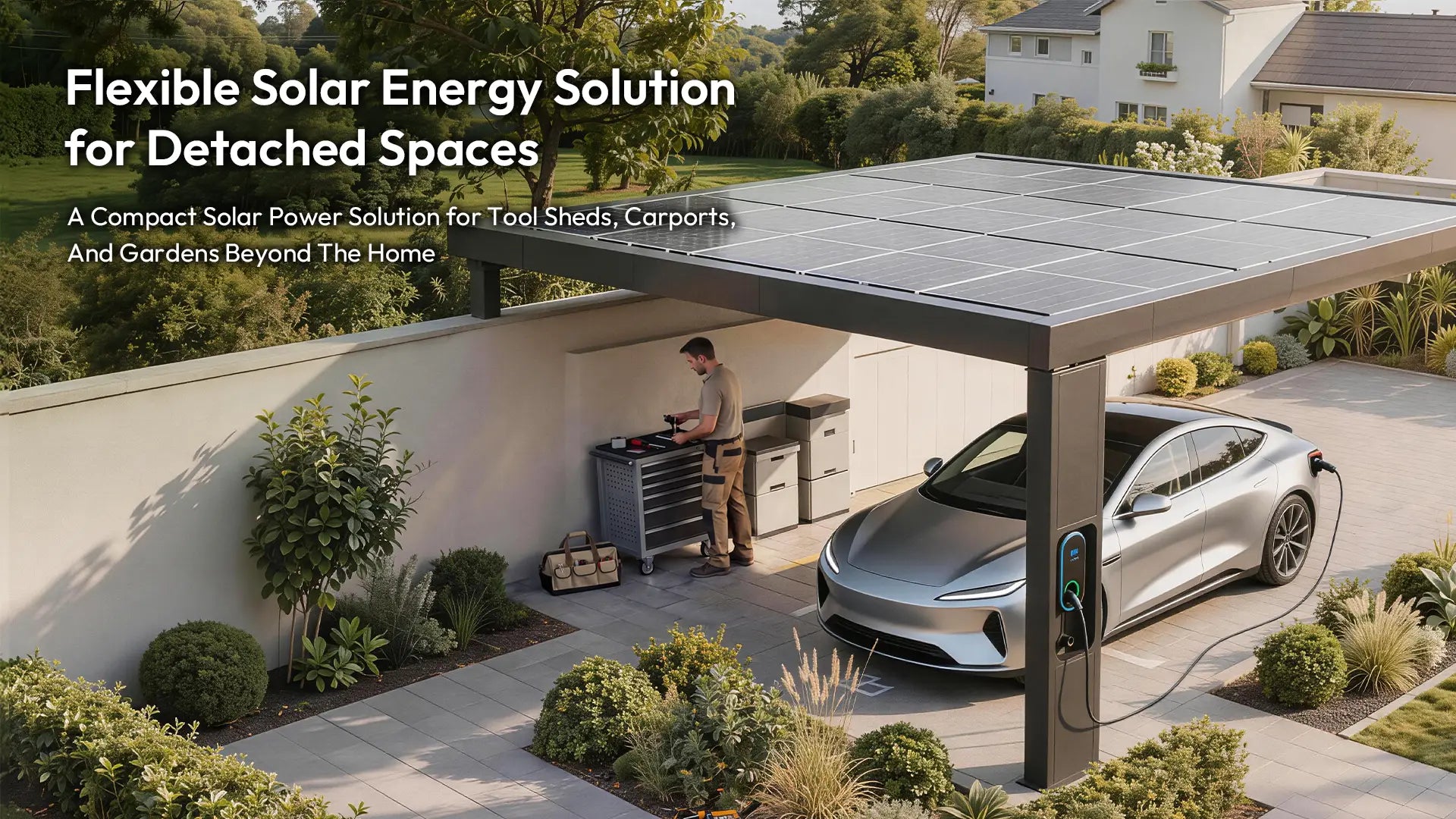
Carport / Parking Shed — “Shade + EV Charging”
Best for: homeowners who want covered parking and to charge an EV from a solar canopy or wood carport with integrated panels.
Recommend: Solar carports double as weather protection and a high-visibility solar installation; the solar carport market for North America is growing strongly (multi-year CAGR in the high single digits to low double digits). If your site and budget allow, a carport is an excellent place to put panels.
“Most homeowners pair a solar carport with battery storage and smart energy management so EV charging draws from solar when available and from the battery/utility otherwise.” (This is the common hybrid approach used in residential carport designs.)
EV charging basics to state on the page
Typical residential Level 2 chargers operate at 240 V. A 30 A Level 2 circuit gives 240 V × 30 A = 7.2 kW (7.2 kW). A 40 A circuit yields about 9.6 kW (9.6 kW). Plan your carport array + storage accordingly if you want to directly supply EV charging.
Typical system approach:
Panel array size: 3 kW – 10 kW+ depending on desired offset of EV charging.
EV charger: Level 2 wallbox (30–40 A typical) — match to homeowner’s service and vehicle.
Battery storage and smart energy management to smooth solar production and supply the charger during low sun or overnight.


Perfect for Backyard Parties & Outdoor Gatherings
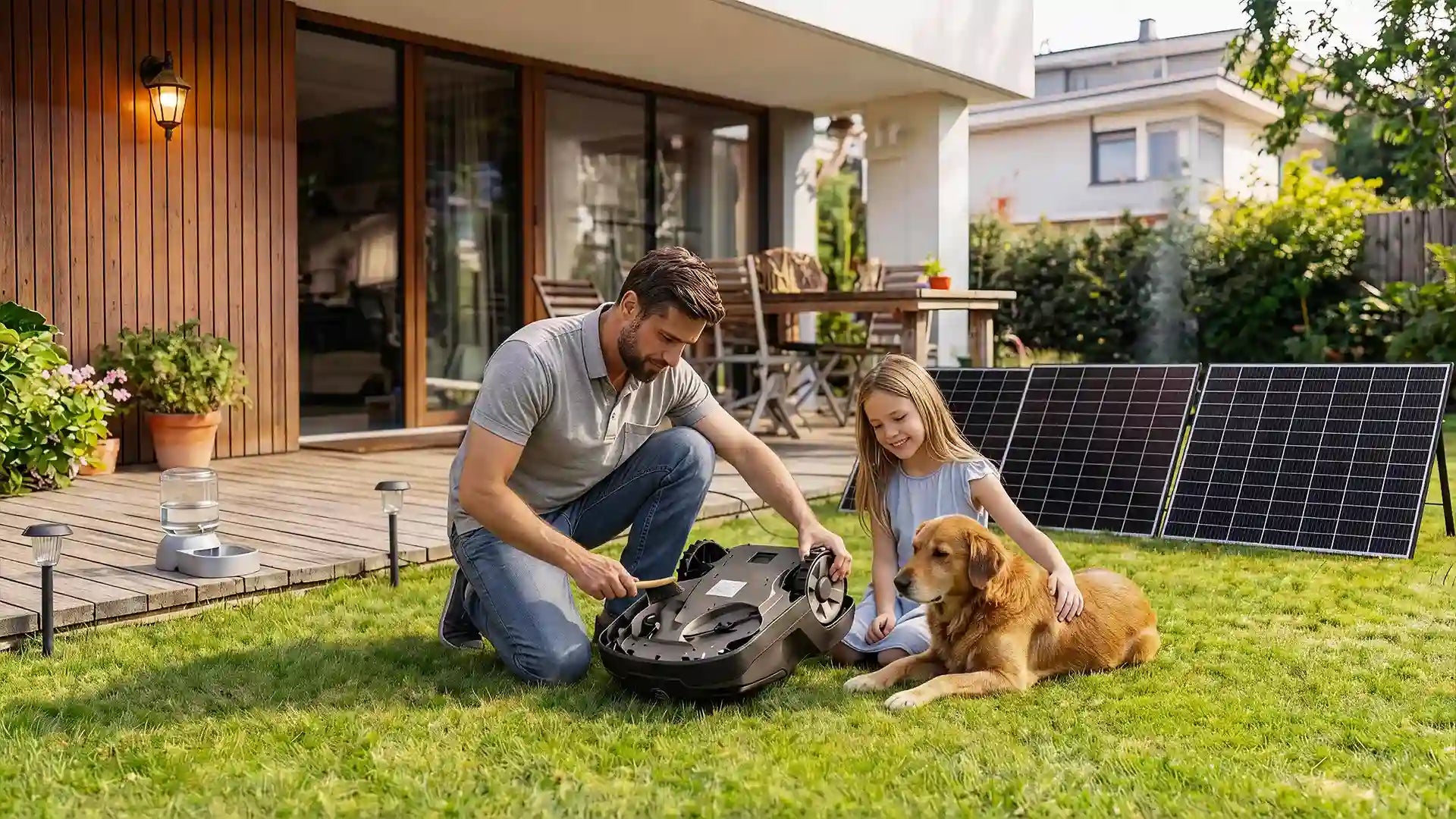
Whether it’s a family BBQ, a weekend get-together with friends, or a nighttime garden party, solar power keeps your backyard bright, comfortable, and clutter-free.
Unlike gas generators, solar systems run silently and produce no fumes, allowing you to enjoy music, conversations, and the natural outdoor atmosphere without background noise or odors. With integrated battery storage, your lights and devices stay powered even after sunset — no interruptions when the party is at its best.
From daytime celebrations to late-night gatherings, JJN Solar turns your yard into a reliable, comfortable, and eco-friendly entertainment space — powered by the sun, not by noise or fuel.
Permits, Interconnection & Services (short practical guidance)
Yard micro-systems (small panels powering a single device) often have fewer permitting hurdles, but always check local rules. (Larger hardwired systems normally require electrical permits and inspections.)
Carports and systems tied to grid or EV charging generally require utility notification and may require an interconnection agreement. Consult a licensed electrician and local permitting authority.
For North American homeowners, include a note (on the page) to “check local code and HOA rules” — some HOAs accept solar; some require design review.
Recommended Products
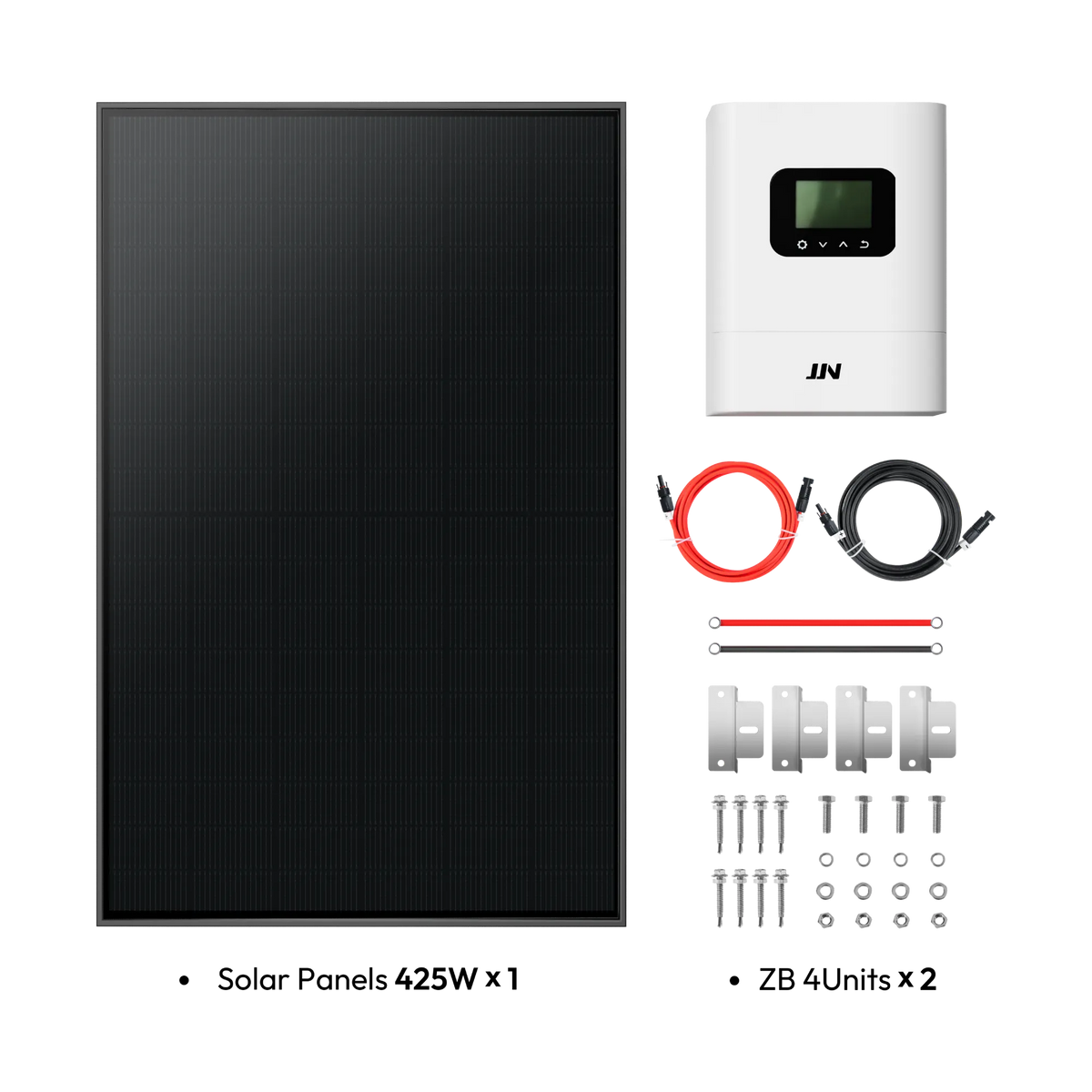
Solar Panel Mount Adjustable Tilt Mounting
Solar Panel Mounting Z Bracket 4Units
FAQs
Is this system powerful enough for backyard parties?
Yes. JJN Solar backyard solutions are designed to support common party equipment such as string lights, outdoor speakers, projectors, beverage coolers, and small electric grills. With integrated battery storage, the system continues supplying power after sunset, keeping your event running smoothly.
Will the system work at night or on cloudy days?
Yes. The battery stores energy generated during the day and supplies power at night or during low-sun conditions. As long as the system is properly sized, it can reliably support evening gatherings and daily backyard use.
Is solar power really better than a gas generator for backyard use?
For residential yards and parties, solar power is often a better choice. Solar systems operate silently, produce no fumes, and require no fuel. This makes them safer, cleaner, and more comfortable for social environments compared to traditional gas generators.
Will there be a lot of visible wiring in my yard?
No. One of the key advantages of JJN Solar backyard solutions is a clean and organized layout. The system minimizes long extension cords and exposed wiring, helping keep your lawn and walkways tidy and safe for family and guests.
What backyard devices can this solution power?
The system can power or recharge many common backyard devices, including:
1. Pathway and landscape lights
2. Security cameras and smart doorbells
3. Smart locks and pet feeders
4. Outdoor speakers and entertainment devices
5. Battery-powered garden and lawn tools
Is this solution suitable for renters or temporary setups?
Yes. Many JJN Solar backyard systems are modular and portable, making them suitable for renters or homeowners who prefer non-permanent installations. Components can be relocated or expanded as your needs change.
How much maintenance does a backyard solar system require?
Very little. Solar panels typically require only occasional cleaning, and batteries are designed for long-term use. There is no engine, fuel, or oil maintenance, unlike traditional generators.
Is the system safe to use around children and pets?
Yes. When properly installed, solar systems are safe for residential environments. The absence of hot exhaust, open fuel, and noisy engines makes them especially suitable for households with children and pets.
Can I expand the system in the future?
Absolutely. JJN Solar backyard solutions are modular. You can start with a small setup for lights and devices, then add more panels or battery capacity later to support parties, tools, or additional backyard features.
Who is this backyard solar solution best for?
This solution is ideal for:
Homeowners who host backyard parties or outdoor events
Families who want clean, quiet outdoor power
DIY enthusiasts and tool users
Anyone looking for a tidy, cable-free backyard energy setup
Why Shop on JJN Store
Secure Payment with 0% APR Intallments
30-Day Return and Refund Service
Lifetime Customer Support
Pay More Save More with Every Purchase