Hosting an outdoor soccer watch party is more than dragging your TV into the backyard. A truly great setup needs a stable picture, clear audio, comfortable seating — and a power source that won't let you down mid-match.
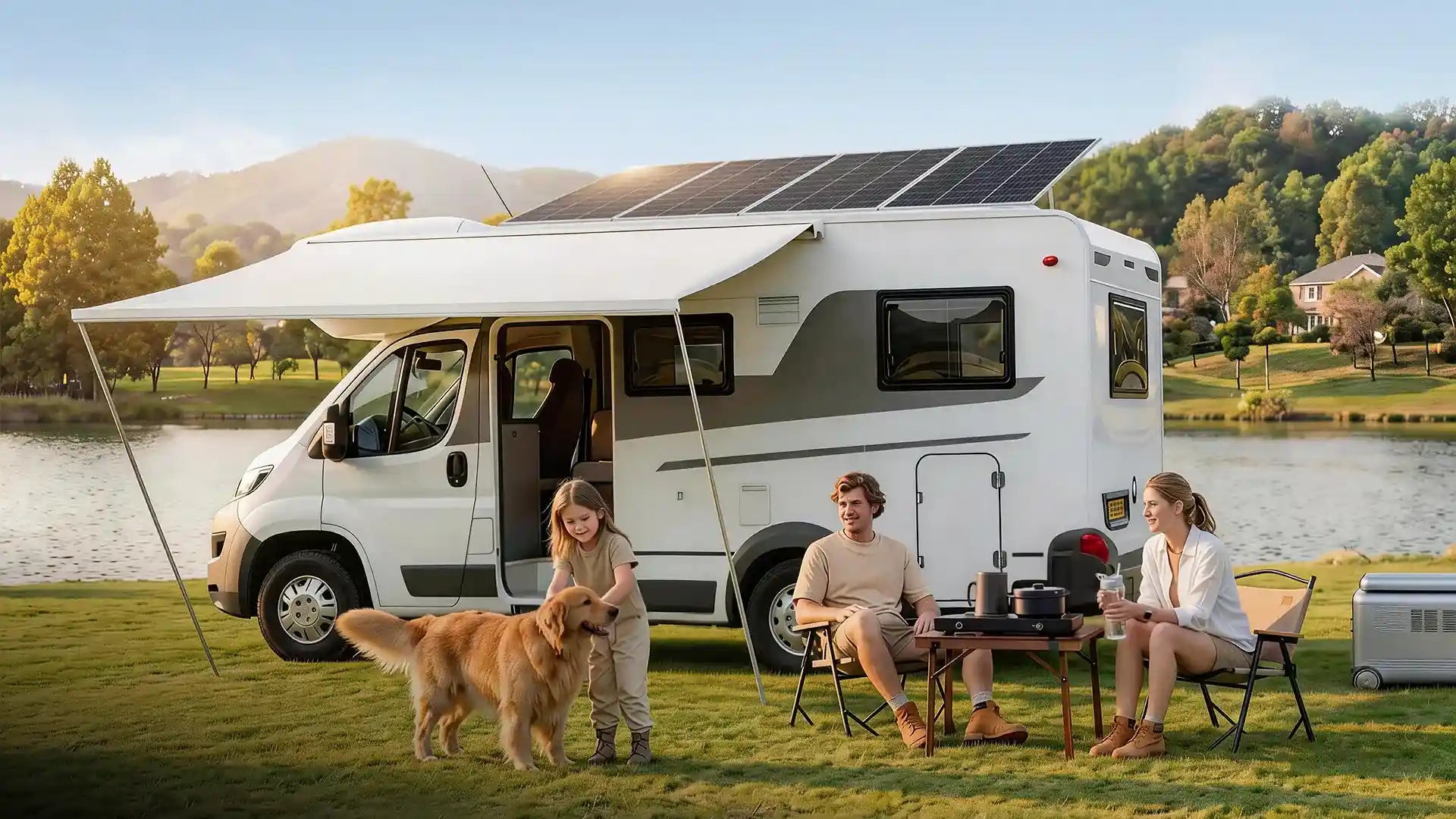
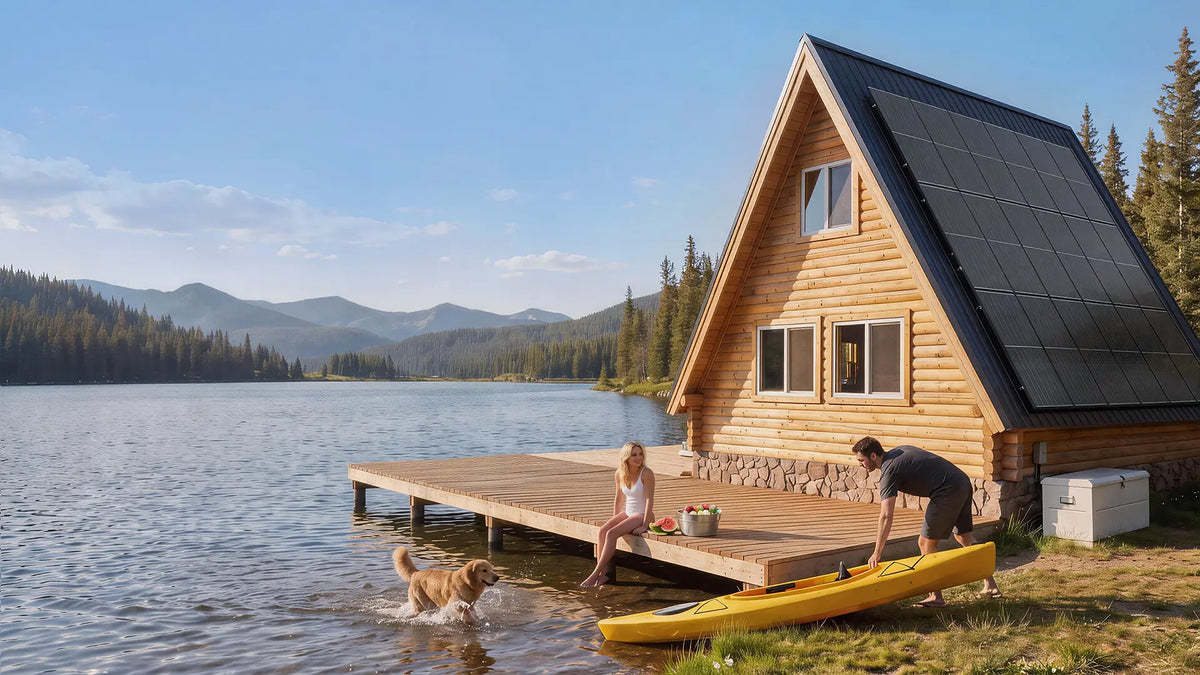
Instead of running extension cords across the lawn, a solar panel + portable power station combo is the smarter outdoor entertainment solution: charge during the day, deliver steady power through the night, and keep the whole party running without a single trip to the breaker box.
Why "Stable" Beats "Loud" Every Time {#stability}
The biggest threat to an outdoor watch party isn't a small crowd — it's a buffering stream, a dead battery, or a flickering screen right when the penalty kicks start.
What you actually need is a system that works together seamlessly outdoors:
- Display — for an immersive viewing experience
- Audio — to build the crowd atmosphere
- Solar panels — to convert afternoon sunlight into usable energy
- Portable power station — to deliver that energy cleanly and steadily through the match
This combination works perfectly for backyards, patios, driveways, and any temporary outdoor viewing area.
Choosing the Right Screen for Outdoor Viewing {#screen}
Daytime Matches
Go with a high-brightness, anti-glare display. Sunlight washes out standard screens quickly, so look for panels rated above 700 nits if you're watching before sunset.
Evening or Night Matches
A projector and screen setup delivers the true stadium big-screen feel and is significantly more power-efficient. A 100–200W solar panel can keep it running comfortably alongside your speakers and lighting.
Either way, the goal isn't the flashiest gear — it's gear that performs reliably in an outdoor environment. A solar-backed power system makes that reliability possible without depending entirely on indoor outlets.
Why Solar Power Works for Outdoor Watch Parties {#solar}
The core problem with outdoor events isn't whether you have power — it's whether you have consistent power that lasts the full event.
Solar panels solve this at the source. They charge your portable power station throughout the day, so by kickoff, you already have a full (or near-full) battery ready to run your display, speakers, lighting, and phone charging simultaneously.
Key advantages for watch parties:
- No extension cords running across the yard (trip hazard eliminated)
- No dependence on a single indoor outlet
- Silent, clean power that doesn't interrupt the atmosphere
- Scales easily — add panels to support more devices
Available solar panel options range from 100W entry-level to 400W+ high-output. The 200W panel (with 25%+ conversion efficiency) is the most popular choice for mid-size backyard parties: fast enough to top off your power station between halves, powerful enough to handle multiple devices at once.
The Smartest Outdoor Power Strategy: Charge by Day, Party by Night {#strategy}
Don't wait until kickoff to think about power. The best outdoor watch party setup follows a simple two-phase approach:
Phase 1 — Daytime Charging Position your solar panel in the sunniest spot in your yard, angled toward the sun. Let it charge your portable power station throughout the afternoon. The more sun it gets before the match, the more runtime you'll have.
Phase 2 — Evening Output Once the match starts, your power station takes over. It delivers stable, regulated power to your projector or TV, outdoor speakers, string lights, and USB charging — all from the energy you captured during the day.
The result: a clean, cord-free setup that looks intentional rather than cobbled together — and guests who never have to think about where the power is coming from.
Solar Panel Comparison: Which Wattage Do You Need? {#comparison}
| Panel | Best For | Charging Speed | Typical Use Case |
| 100W | Small gatherings (under 8 people) | Moderate | Bluetooth speaker, phone charging, basic lighting |
| 200W | Mid-size parties (8–20 people) | Fast | Projector or TV + speaker + string lights |
| 400W+ | Large backyard events | Very fast | Multiple screens, PA system, extended runtime |
Our recommendation for most backyard watch parties: the 200W panel. It hits the sweet spot between portability and output, recharges your power station quickly between uses, and handles a full evening of entertainment without breaking a sweat.
Day-of Setup Checklist {#checklist}
Start your setup at least two hours before kickoff. Work through this order:
- Position your solar panel — find the spot with the most unobstructed sunlight; avoid shade from trees, awnings, or umbrellas
- Set up your display — angle it away from direct sun glare; confirm viewing lines from all seating areas
- Run your speakers — test volume levels and coverage before guests arrive
- Arrange seating — stagger heights so everyone has a clear sightline (low chairs up front, higher seating in back)
- Prep food and drinks — get everything ready so you're not in the kitchen when the action starts
- String up the lights — set them but leave them off until dusk for best effect
By the time the second half kicks off and the string lights come on, the whole setup will feel like a purpose-built outdoor venue — not a last-minute scramble.
Pro Tips for a Smooth Party {#tips}
Run a full dry-run the day before. Test your internet signal strength outdoors, screen brightness at different light levels, audio coverage at the edges of your seating area, and solar panel output at your planned position. Surprises discovered the day before are easy to fix. Surprises discovered mid-match are not.
Choose energy-efficient string lights. LED string lights use a fraction of the power of incandescent ones and look better too. They'll have minimal impact on your power budget.
Keep the solar panel at its optimal angle all day. Maximize afternoon charging so your power station enters the match at full capacity. If you're expecting a high-intensity second half, you'll want every amp-hour you can get.
Keep cable runs tight and along the edges. Even with a solar setup, you'll have some cables. Route them along fences, walls, or the perimeter of the space to keep the central viewing area clear.
Frequently Asked Questions {#faq}
Can a solar panel power my TV or projector directly?
The recommended approach is to use your solar panel for charging and your portable power station for output. Running devices directly from a panel can cause voltage fluctuations that damage sensitive electronics. A power station acts as a buffer, delivering clean, stable power regardless of cloud cover or changing sun angles.
How much power does an outdoor watch party actually need?
A typical setup — projector or mid-size TV, a pair of outdoor speakers, and string lights — draws roughly 300–500W during peak use. A 200W solar panel paired with a 1,000Wh power station will handle a 3–4 hour match comfortably, with reserve capacity for halftime and post-match.
What's the most common mistake people make with outdoor watch parties?
Underestimating power needs and overestimating their extension cord situation. Most people realize too late that their single outdoor outlet can't safely run a TV, speakers, and lighting simultaneously. Planning your solar + storage system in advance eliminates this entirely.
Do I need a special projector for outdoor use?
You don't need an "outdoor" projector specifically, but you do need one with adequate brightness — 3,000+ lumens for semi-dark conditions, 4,000+ lumens if there's ambient light nearby. Also ensure it's rated for the temperature range in your area.
How do I keep the power station safe if it rains?
Keep your portable power station under a canopy, awning, or purpose-built shelter. Most units are not rated for direct rain exposure. Solar panels, however, are typically weatherproof and can remain outside. Check your specific model's IP rating before leaving it outdoors overnight.
Final Thoughts
A truly memorable outdoor soccer watch party doesn't come from having the most equipment — it comes from having the right setup that runs smoothly from kickoff to final whistle.
When your solar panel quietly does its job in the afternoon sun, your display locks in a crisp picture at dusk, and your speakers push the crowd energy across the backyard — that's when your outdoor space stops being a yard and becomes a venue.
Plan the power first. Everything else follows.