Desert overlanding is one of the most demanding environments for any off-grid power system. Extreme heat, fine dust, constant vibration, and long travel distances all challenge the reliability of batteries, solar panels, and inverters.
In this environment, success depends less on peak wattage and more on system reliability, thermal stability, and redundancy.
This guide explains how to build a dependable desert camping power system that performs consistently in harsh off-road conditions.
Why Desert Overlanding Power Systems Fail
A typical overlanding solar system is stressed by three core environmental factors:
1. Extreme Heat
Desert regions like Mojave, Sonoran, and Utah regularly exceed 104°F (40°C), while vehicle interiors can be significantly hotter.
Heat impacts:
Battery efficiency and lifespan
Inverter stability
Charge controller performance
Cable insulation durability
2. Dust and Sand Exposure
Fine dust is one of the most common causes of system degradation.
It can:
Reduce solar panel efficiency
Block cooling fans
Damage connectors and ports
Accelerate hardware wear
3. Constant Vibration
Off-road travel introduces continuous shock and vibration from rough terrain.
This leads to:
Loose electrical connections
Fatigue in mounting systems
Internal stress on battery components
A system designed for regular camping often fails prematurely in desert conditions.
Reliability Is More Important Than Peak Power
In consumer marketing, solar systems are often defined by wattage. In desert overlanding, this is misleading.
What actually matters is:
Continuous output under heat stress
Long-duration stability
Fault tolerance and redundancy
Predictable energy recovery
A true high-temperature solar setup is designed for endurance, not short bursts of performance.
Desert Power Priority System
To avoid system failure, energy use must follow a strict hierarchy.
Tier 1: Critical Systems (Always Powered)
GPS navigation and offline maps
Satellite communication devices
Mobile phones (emergency use)
Headlamps and emergency lighting
These systems are essential for safety and navigation in remote desert areas.
Tier 2: Operational Systems
Refrigeration (food safety)
Water pumps (if installed)
Ventilation fans
Basic device charging
These maintain trip continuity and comfort.
Tier 3: Non-Essential Loads
Laptops
Cameras
Drones
Entertainment devices
These should only operate when surplus energy is available.
Battery Performance in Desert Conditions
Battery systems are highly sensitive to heat exposure.
Key issues in high temperatures:
Reduced charging efficiency
Increased internal resistance
Accelerated degradation
Thermal throttling during charging
Most lithium batteries perform optimally below 45°C (113°F), which is often exceeded in desert vehicle environments.
Design solutions:
Use LiFePO₄ batteries for thermal stability
Avoid enclosed or unventilated storage areas
Install batteries in shaded, ventilated zones
Separate batteries from heat-generating components
Solar Performance in Desert Environments
Deserts offer ideal sunlight conditions, but performance is not guaranteed.
Advantages:
High solar irradiance
Long daylight hours
Clear skies
Limitations:
Panel overheating reduces efficiency
Dust accumulation blocks sunlight
Poor tilt angles reduce output by 10–25%
Key insight: Solar panels lose efficiency as temperature increases, even under stronger sunlight.
Multi-Layer Desert Power Architecture
A reliable desert overlanding power system uses three layers of energy redundancy.
1. Solar Generation Layer
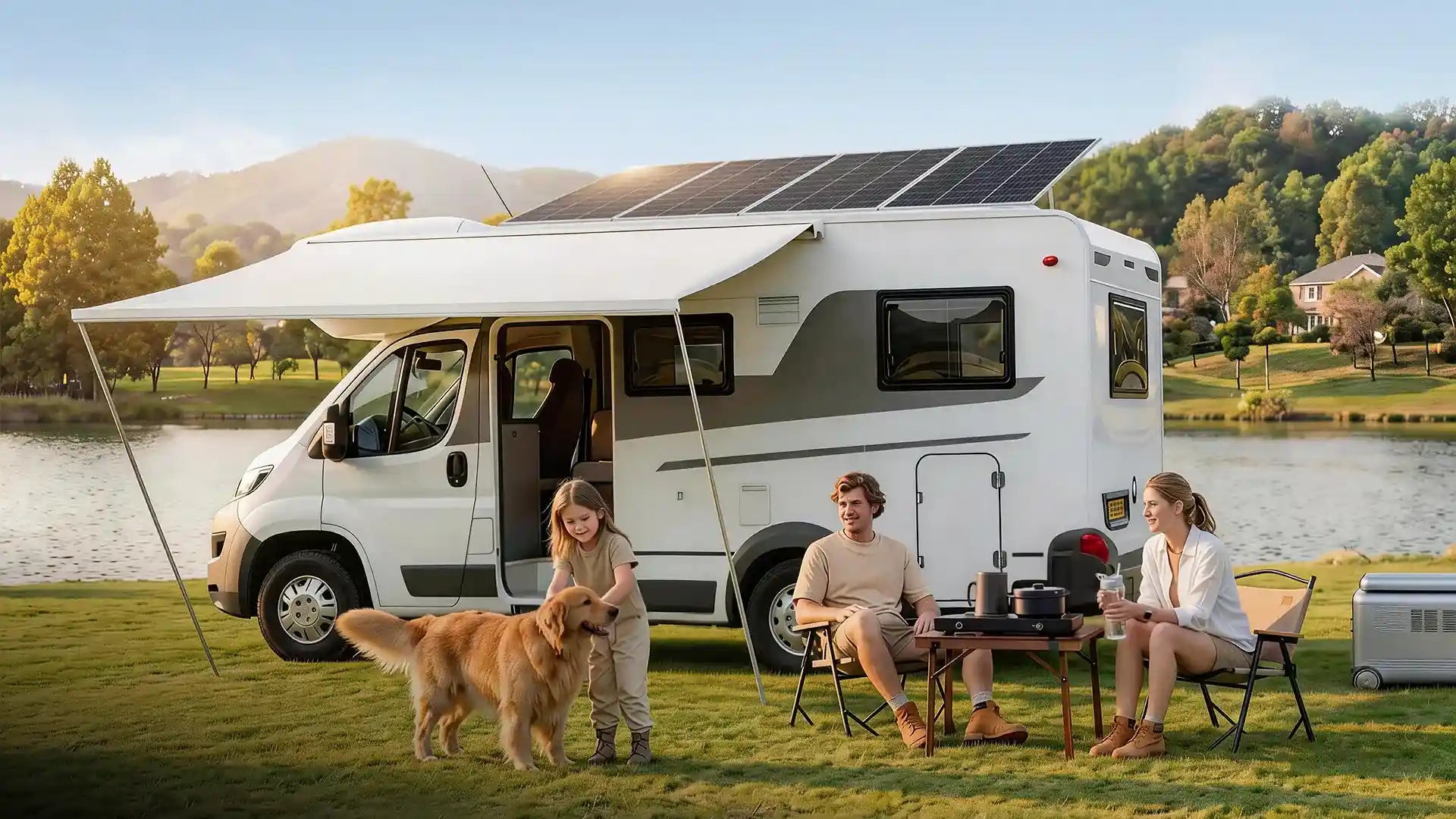
Roof-mounted rigid panels (consistent output)
Portable foldable panels (flexible positioning)
2. Battery Storage Layer
Stores excess solar energy
Stabilizes fluctuating input
Powers nighttime usage
Battery capacity is more important than peak solar wattage in desert travel.
3. Vehicle Charging Layer
Alternator-based charging
Emergency energy recovery
Backup during low solar conditions
This ensures continuity during long-distance travel.
Example Desert Power System Configurations
Solo Overlanding Setup
Best for individual desert travel
Battery: 1000Wh–2000Wh LiFePO₄
Solar: 200W–400W (rigid + portable)
Charging: vehicle + solar hybrid
Inverter: 500W–1500W
Supports:
Navigation systems
Satellite communication
Camera and phone charging
Basic refrigeration
Night lighting
Expedition-Level Setup
Best for multi-day remote desert travel or group setups
Battery: 2kWh–5kWh
Solar: 400W–1000W
Inverter: 2000W+
Redundant charging inputs
Supports:
Multi-device charging
Drone and camera workflows
Larger refrigeration systems
Communication redundancy
Extended off-grid operation
Best Practices for Desert Overlanding Power Systems
1. Avoid Heat Traps
Never operate batteries in sealed compartments without airflow.
2. Prioritize Shade Management
Keep batteries in shaded areas
Ensure airflow around electronics
Avoid direct sun exposure on inverters
3. Maintain Solar Panels
Dust accumulation can significantly reduce energy generation. Regular cleaning is essential.
4. Control Energy Load
Avoid running multiple high-power devices during peak heat hours.
5. Design for Redundancy
A single failure in desert conditions can cascade into total system shutdown.
Final Thoughts
Desert travel transforms power planning from a convenience issue into an engineering reliability challenge.
A successful desert camping power system is not defined by maximum wattage, but by:
Thermal stability
Environmental durability
Energy redundancy
Predictable performance under stress
The most reliable off-grid solar system for overlanding is one that continues working when temperatures rise, dust increases, and conditions become unpredictable.
In desert environments, consistency is power.