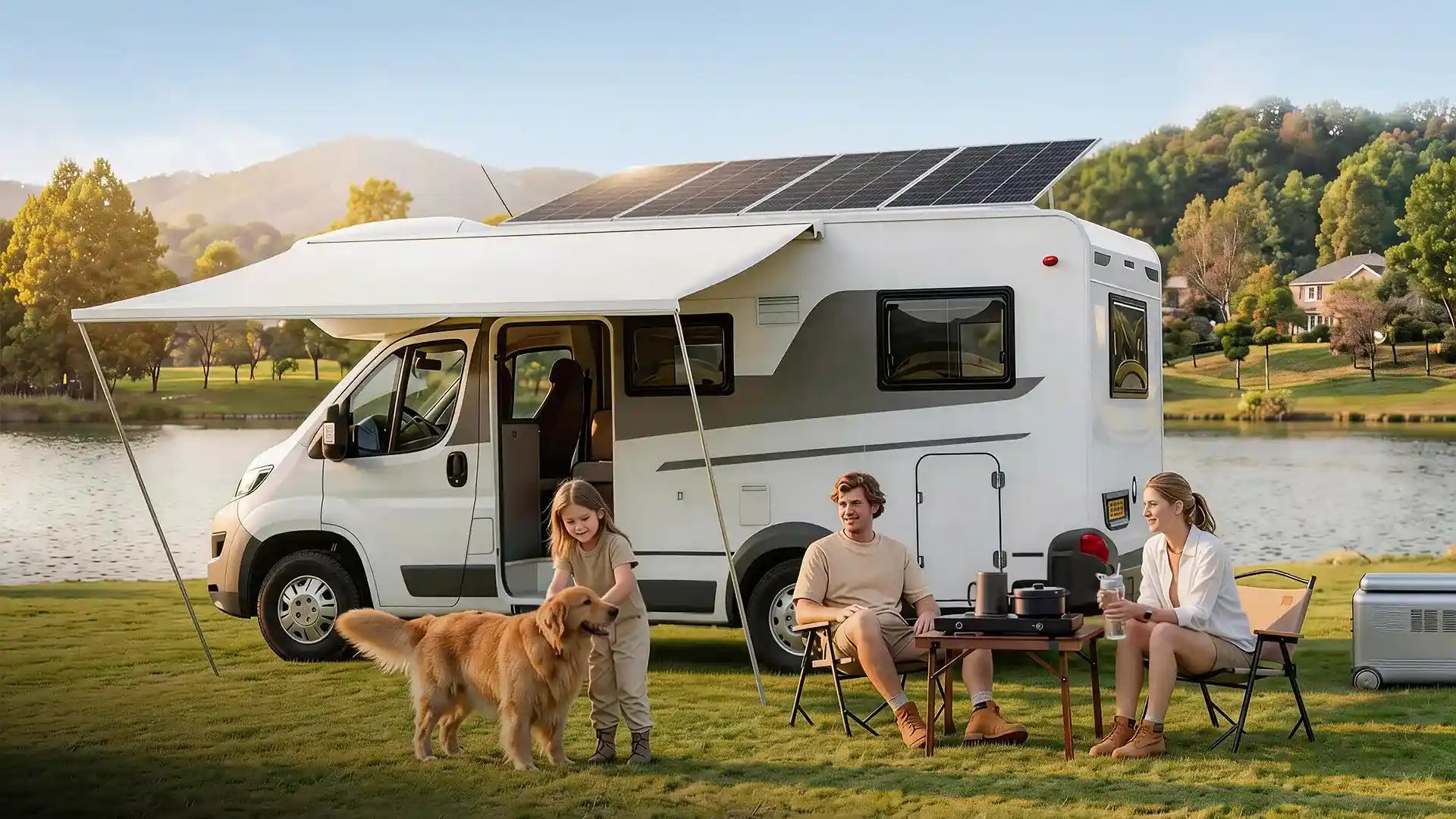

Why RV Solar Matters for Modern Travel
Whether you are planning a California road trip, a national park road trip, or searching for RV camping near me, one thing stays the same: power matters. When you travel by RV, trailer, van, or camper, your electricity needs do not disappear just because you leave home. Lights, fans, phone charging, portable refrigerators, laptops, and small kitchen appliances all depend on a stable energy source.
That is why more travelers are turning to solar power. A well-designed RV solar system helps reduce dependence on campground hookups and gives you more freedom when you camp in remote places. For beach camping, California camping, or a long weekend on the road, solar power adds flexibility and peace of mind.
What Makes Up a Complete RV Solar System?
A good RV solar system is more than a single solar panel. It is a complete energy setup made of several key parts that work together.
1. Solar Panels(Your Power Source)
Solar panels capture sunlight and convert it into electricity. For many RV users, a 200W panel is a practical starting point because it is large enough to support useful daily charging, but still manageable for installation.
The JJN 200W N-type solar panel is a strong option for RV owners who want a clean, efficient, and reliable source of power. It is especially suitable for travelers who want to keep their setup simple without going too small.
2. Charge Controller(System Protection)
The charge controller regulates the energy coming from the panel and sends it safely to the battery. This prevents overcharging and helps the system run smoothly. For most RV solar systems, an MPPT controller is the preferred choice because it helps extract more usable energy from the panel.
3. Battery Bank(Energy Reserve)
The battery stores the power collected by the solar panel. Without a battery, you would only be able to use electricity when the sun is shining. Most RV users choose a lithium battery setup because it stores energy efficiently and supports repeated charging cycles.
4. Inverter(Power Conversion)
An inverter converts DC power from the battery into AC power for household-style devices. If you want to run appliances like a coffee maker, TV, or laptop charger, the inverter is a critical part of the system.
5. Wiring, Fuses, and Mounting Accessories
Small parts matter. Cables, connectors, fuses, and mounting hardware keep the system safe and functional. A solar setup is only as strong as the way it is installed.
How to Think About Panel Size for RV Camping
The right panel size depends on how you travel.
If you use your RV for short trips, light usage, and basic charging, one JJN 200W N-type solar panel may be enough to support essential needs. If you camp for longer periods or use more power-hungry appliances, you may need multiple panels or a larger battery bank.
A smart way to plan is to start with your daily load:
1. Phone and device charging
2. Lighting
3. Fan use
4. Small fridge operation
5. Occasional laptop use
Once you know what you consume, you can match the system to the trip style.
Why the JJN 200W N-type Solar Panel Is a Practical Choice
For many RV owners, the ideal panel is not the biggest one. It is the one that fits the roof, the use case, and the budget.
The JJN 200W N-type solar panel is a practical middle-ground solution for:
1. RV beginners
2. Weekend campers
3. Trailer owners
4. Van travelers
5. Users who want a clean starting point for off-grid power
It also works well as part of a larger system. If your future goal is to scale up, starting with a 200W panel gives you room to expand later.
Final Thoughts
A solar system for RV travel should be designed for real use, not just for appearance. Start with a panel, then build around it with the correct controller, battery, inverter, wiring, and mounts. For most users, the JJN 200W N-type solar panel is a strong foundation for a dependable RV energy system.
FAQ
Q1: Is 200W enough for RV camping?
For basic usage (lights, phones, small devices), yes.
Q2: Can I expand later?
Yes, 200W systems are highly scalable.
Q3: Do I need an inverter?
Only if you plan to use AC appliances.