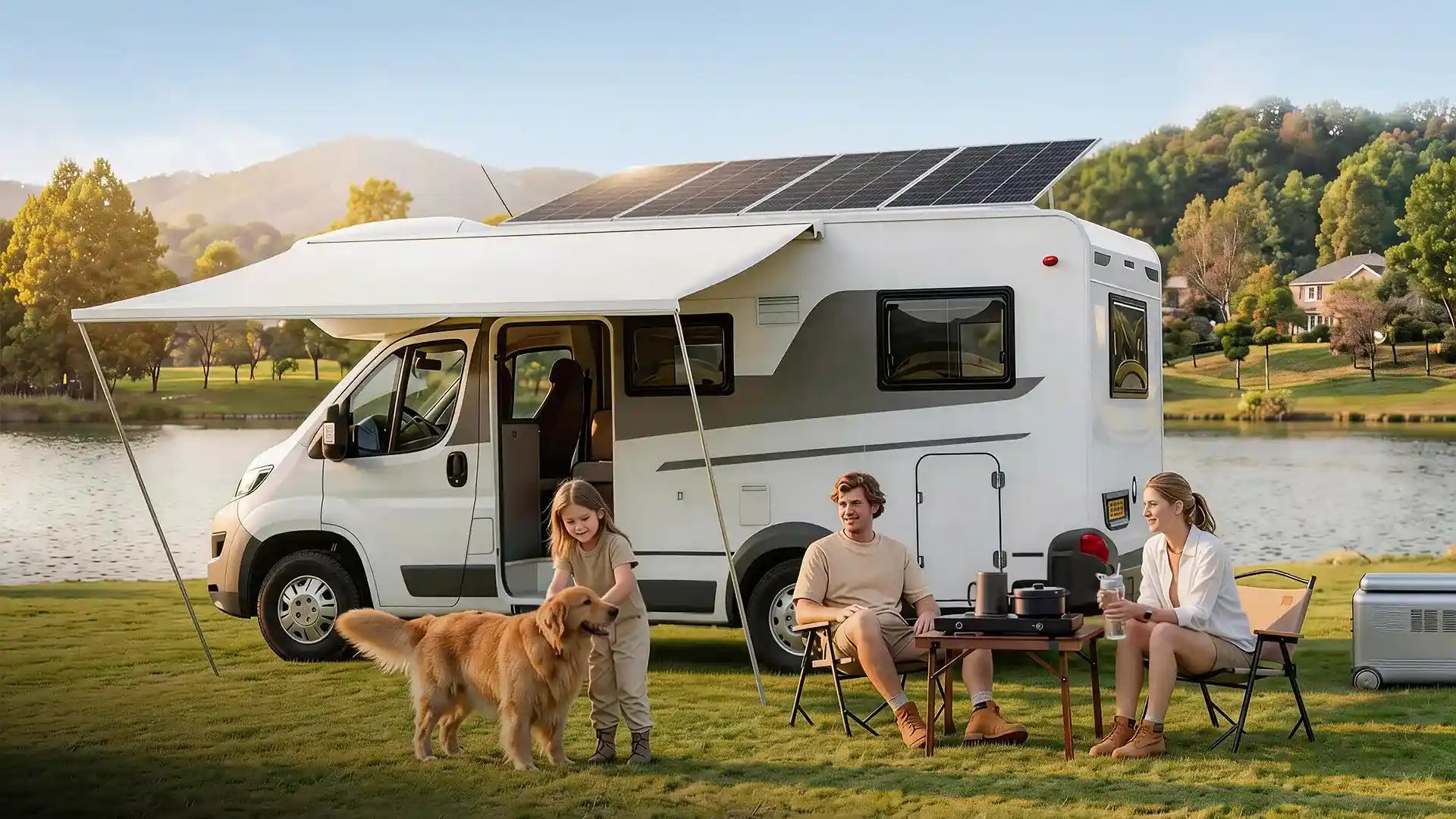

RV Travel Case Study: Designing Solar Systems for Different Power Needs
The Right RV Solar Setup Depends on the Way You Travel
No two RV travelers use power the same way. For casual weekend campers, your needs may stop at keeping phones charged and lights on through a short trip. For family campers or full-time off-grid enthusiasts, you need reliable power to run appliances, keep food cold, and stay comfortable during extended stays — even in remote areas with no hookups.
That’s the mistake many new RV owners make: sizing a solar system based on available roof space rather than their actual travel behavior and daily power needs. Whether you’re planning a coastal California road trip, backcountry boondocking in a national park, or a cross-country camping adventure, your solar setup should align with how often you drive, how long you stay in one spot, and what devices you use every day.
Case 1: The Casual Weekend Traveler
You take short 2- to 3-day trips, usually stay in state parks or established campgrounds, drive most days, and mainly use small, low-power devices. You are not trying to run high-draw appliances. Instead, you want to support basic RV energy needs with a simple setup.
Your core power needs:
- Daily phone and small device charging
- 12V interior lighting and limited exterior lighting
- A small 12V fan
- Occasional charging for cameras, tablets, or similar low-power electronics
Best-fit system
A compact system built around the JJN 200W N-type solar panel is often enough for this type of user. The goal is not to support everything at once. The goal is to meet the essential load with a simple, reliable setup.
Case 2: The Family Camper
You’re traveling with family or a group for 3- to 7-day trips, seasonal camping, or school-break travel. You may stay in one place for a few days at a time, have more devices to charge, and want a more comfortable setup with less dependence on hookups or generator use.
A family-oriented setup may include:
- One or more solar panels sized to the expected energy demand
- An MPPT charge controller sized for the array and battery system
- A properly sized lithium or deep-cycle battery bank
- A pure sine wave inverter sized for the AC loads you plan to run
- Safe cable routing and appropriately rated circuit protection
Best-fit solar system:
This type of travel style often benefits from a more expandable solar setup. For some users, the JJN 200W N-type solar panel may be part of that system, with the total panel count depending on daily energy use, battery storage, and available installation space.
Case 3: The Long-Stay Off-Grid Traveler
You’re traveling with kids or a group for 3-7 day trips, seasonal camping, or school break vacations. You stay in one spot for 2-3 days at a time, have more people and devices to power, and want home-like comfort without relying on campground hookups or a noisy gas generator.
- Multiple daily device charges (phones, tablets, handheld gaming consoles, cameras)
- Consistent interior & exterior lighting for evening activities
- A 12V RV compressor fridge (the standard for modern family RVs)
- Small kitchen appliances (like a coffee maker or blender, via an inverter)
- A roof vent fan or a small portable AC unit for cooling
What This Means for Your RV Solar Setup
The core lesson is simple: don’t start with the panel alone — start with how you actually travel and what you need to power.
Some RV owners begin by choosing the largest setup they can fit, but system planning is usually more effective when it starts with real energy use, travel habits, and the types of devices or appliances involved. A lighter-use traveler may need A very different setup from someone spending extended time off-grid.
For some lighter-use campers, the JJN 200W N-type solar panel may help support basic daily loads when paired with appropriate battery storage and used under suitable charging conditions. For users with greater energy needs, it may serve as one component within a larger system, depending on total load, storage capacity, and overall design.
Why This Approach Helps Buyers Make Better Decisions
When people search for RV destinations or trip ideas, they are often focused on where they plan to go. But solar planning works best when the system is matched to how the RV will actually be used at that destination.
A travel-first approach can help buyers compare system options more realistically and avoid oversizing or undersizing their setup. For some users, the JJN 200W N-type solar panel may be one option within that planning process, depending on energy goals, installation constraints, and future expansion plans.
FAQ:
Q1: How many solar panels do I need for RV living?
A: The right number depends on your energy use, travel style, and battery storage. Some light-use setups may start around 200W, while larger or full-time systems often require substantially more solar capacity.
Q2: Can a single 200W solar panel support an RV fridge?
A: In some setups, it may help support A 12V compressor fridge, but results depend on battery capacity, sunlight, weather, and the fridge’s actual power draw. A single panel is not A one-size-fits-all solution.
Q3: Is solar enough for full-time off-grid RV living?
A: It can be for some users, but only when the system is designed around real daily loads, sufficient battery storage, and expected operating conditions.