In North America, tailgating is no longer just about showing up early for the game. For many fans, the parking lot is part of the event.
Outside NFL stadiums, college football fields, NASCAR tracks, baseball parks, and large concert venues, tailgate parties have evolved into full social gatherings. People bring TVs to stream pre-game coverage, portable fridges packed with drinks, Bluetooth speakers, smokers, grills, LED lighting, gaming consoles, and even outdoor cooking stations.
The modern tailgate party is built around atmosphere, convenience, and community. And increasingly, fans are replacing loud gasoline generators with cleaner, quieter tailgating solar setups.
A properly designed solar power system can keep your party running for hours without engine noise, fuel smells, or generator restrictions — making it one of the most practical upgrades for modern game-day culture.
Why Solar Is Becoming Popular for Tailgate Parties
Traditional generators have been common in parking lots for years, but they come with several downsides:
1. Loud engine noise
2. Fuel storage hassles
3. Exhaust fumes near food and crowds
4. Difficult startup procedures
5. Parking lot restrictions at some stadiums
6. Constant refueling during long events
Solar-powered systems paired with portable battery stations solve many of these problems.
Benefits of Solar for Tailgating
1. Quiet Operation
One of the biggest advantages of game day power systems using solar is silence.
At crowded tailgate events, people want to:
Talk
Watch pre-game coverage
Listen to music
Socialize comfortably
A silent battery-powered setup creates a much better atmosphere than a generator running nearby for 6–8 hours.
2. Faster Setup
Modern portable solar systems are simple:
Unfold panels
Connect battery
Plug in devices
There is:
No fuel mixing
No pull-start engine
No oil maintenance
No warm-up time
For fans arriving early to secure parking spots, quick setup matters.
3. Better for Stadium Parking Lots
Many stadiums and event venues are becoming stricter about:
Noise levels
Open fuel containers
Generator placement
Exhaust safety
Solar systems avoid most of these issues entirely.
4. Easier All-Day Power Management
A good power tailgate party setup combines:
Solar charging
Portable battery storage
Efficient appliances
This allows continuous daytime charging while devices are running.
Instead of watching fuel levels, users monitor battery percentage and solar input directly from mobile apps or display screens.
Typical Tailgating Power Needs
Most tailgate setups use less power than people expect.
The key is understanding:
Continuous loads
Peak startup loads
Runtime expectations
Here are the most common game-day devices.
Typical Tailgate Party Load Table
|
Device |
Running Wattage |
Typical Usage |
|
40–55" LED TV |
60–120W |
4–8 hrs |
|
Portable fridge/freezer |
40–80W average |
Continuous |
|
Bluetooth speaker |
20–100W |
4–10 hrs |
|
LED string lights |
10–50W |
Evening use |
|
Phone charging |
10–30W |
Intermittent |
|
Tablet/laptop |
45–100W |
Intermittent |
|
Electric pellet grill ignition |
200–500W startup |
Short bursts |
|
Pellet smoker fan/auger |
50–150W |
Continuous |
|
Small electric grill |
800–1500W |
Heavy load |
|
Wi-Fi hotspot/router |
10–30W |
Continuous |
|
Portable fan |
20–80W |
Warm-weather games |
Most standard tailgate setups consume:
1kWh–3kWh during a typical event
Larger social setups can exceed:
5kWh+ for all-day operation
Why Solar Works Especially Well for Tailgating
Unlike home backup systems, tailgating power usage happens mostly during daylight hours.
That is ideal for portable solar charging.
During afternoon games:
Solar panels actively recharge batteries
TVs and fridges run simultaneously
Runtime extends throughout the event
This makes solar for BBQ and TV setups surprisingly efficient compared to overnight off-grid applications.
Portable solar systems also pair naturally with:
Trucks
SUVs
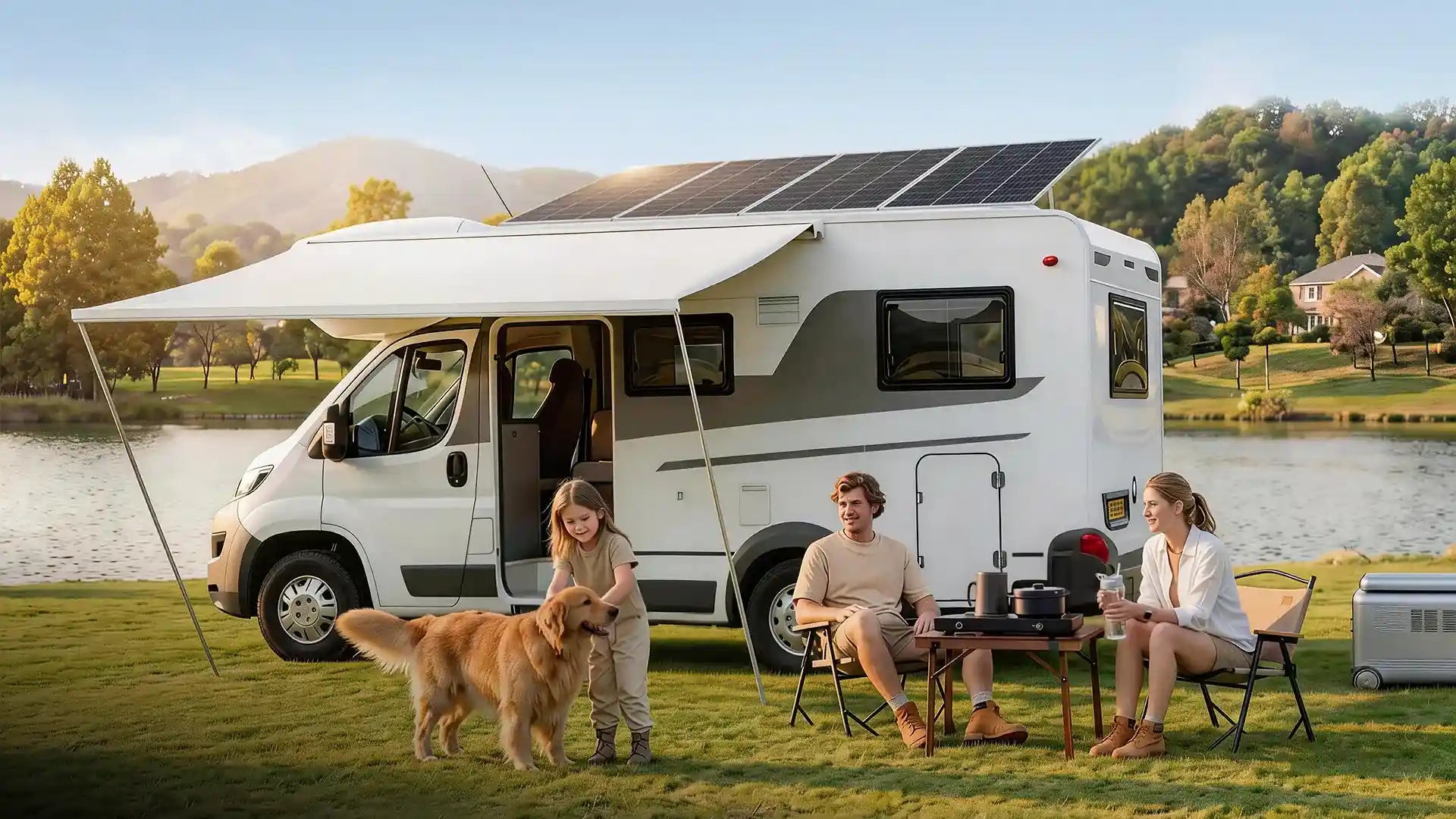
RVs
Camper vans
Travel trailers
Many fans already transport enough roof or cargo space for foldable panels and battery stations.
Choosing the Right Tailgating Solar Setup
Not every tailgate party needs a massive power station.
The best setup depends on:
1. Group size
2. Duration
3. Cooking equipment
4. Entertainment level
5. Overnight camping needs
1. Lightweight Tailgate Setup
Best for:
Casual fans
Small groups
Quick setup
Day trips
Typical Devices
Phone charging
Bluetooth speaker
Small TV
LED lighting
Cooler support
Recommended System
300W–800W solar input
1kWh–2kWh battery storage
1000W–1500W inverter
This setup is compact, portable, and easy to transport in most SUVs or pickup trucks.
Perfect for:
College football parking lots
Quick NFL tailgates
Concert pre-parties
2. Standard Game-Day Setup
Best for:
Family tailgates
Multi-TV setups
Full-day parking lot events
Social hosting
Typical Devices
Larger TV
Portable fridge
Speaker system
Pellet smoker
Lighting
Device charging
Recommended System
800W–2kW solar array
2kWh–5kWh battery storage
2000W–3000W inverter
This is the sweet spot for most modern tailgating solar users.
It supports:
Reliable all-day operation
Quiet entertainment
Consistent refrigeration
Extended cooking sessions
3. Heavy-Duty Tailgate Party Setup
Best for:
Large fan groups
RV tailgating
Overnight events
Premium hosting experiences
Typical Devices
Multiple TVs
Outdoor kitchen equipment
High-powered speakers
Large fridge/freezer
Fans and lighting
Gaming systems
Recommended System
2kW–4kW solar capacity
5kWh–10kWh+ battery storage
3000W–6000W inverter
These systems are often integrated into:
RVs
Toy haulers
Mobile fan trailers
Custom truck builds
For serious tailgaters, power reliability becomes part of the hosting experience.
Nobody wants the TV shutting off during kickoff.
Portable Fridges vs Ice Coolers
One major shift in modern game day power setups is the rise of portable 12V fridges.
Compared to traditional ice coolers, portable fridges:
Keep consistent temperatures
Eliminate melted ice
Reduce food waste
Free up storage space
Improve drink organization
Most compressor-style portable fridges are surprisingly efficient and consume:
Roughly 30–70W while cycling
This makes them ideal for solar-powered tailgate systems.
The Real Advantage: Atmosphere and Social Experience
The reason many fans invest in better tailgate power systems is not just convenience.
It is about creating a better experience.
The best tailgate parties feel like:
Outdoor living rooms
Mobile sports bars
Social gathering spaces
People stay longer when there is:
Music
Comfortable lighting
Cold drinks
Reliable TV coverage
Food continuously cooking
A silent solar setup improves that environment significantly.
No engine vibration.
No fuel smell around the grill.
No constant generator noise during conversations.
For many fans, that changes the entire atmosphere of the event.
Practical Tips for Tailgate Solar Success
1. Use Efficient Appliances
Energy-efficient TVs, fridges, and lighting dramatically extend runtime.
LED TVs and DC-powered appliances are ideal.
2. Pre-Charge Before Arrival
Most tailgaters fully charge batteries at home before driving to the stadium.
Solar then acts as:
Runtime extension
Supplemental charging
Emergency backup
3. Bring More Solar Than You Think
Cloud cover, parking orientation, and surrounding vehicles can reduce charging efficiency.
Foldable panels between:
200W–400W each
are popular because they are easy to reposition throughout the day.
4. Avoid Full Electric Cooking
Electric grills and hot plates consume huge amounts of power.
Most experienced tailgaters use:
Propane grills
Pellet smokers
Charcoal cooking
While reserving solar power for:
TVs
Fridges
Speakers
Lighting
Electronics
This keeps systems smaller and more practical.
Solar Tailgating Is Becoming Part of Modern Game-Day Culture
Tailgating has always been about more than sports.
It is about:
Community
Ritual
Hosting
Atmosphere
Shared experience
Modern tailgate party setups now blend entertainment, cooking, and portable energy into one mobile social environment.
For fans who want cleaner power, quieter operation, and better portability, tailgating solar systems are becoming one of the most practical upgrades for game-day life.