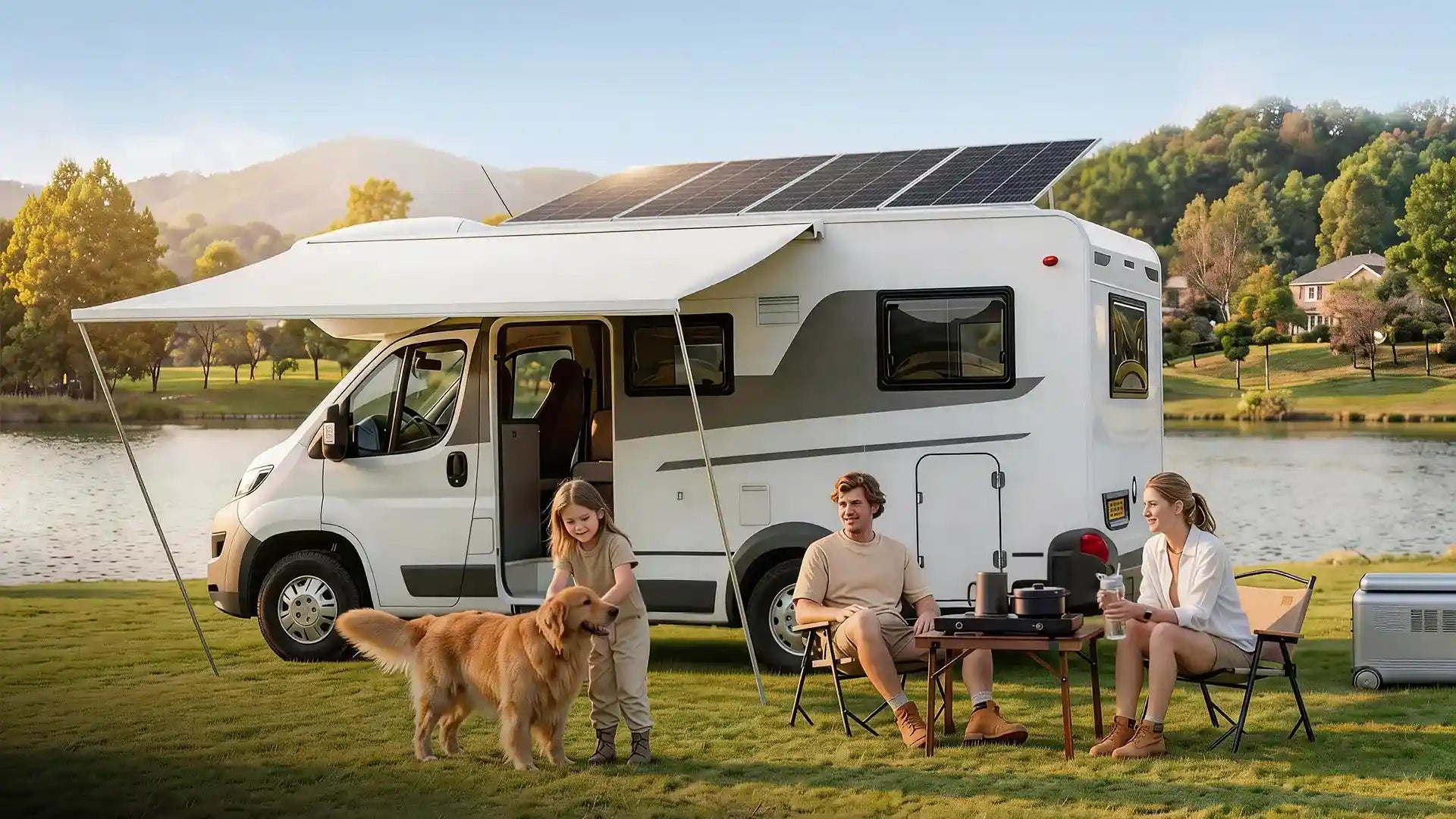

Best Solar Panel Choices for Cold-Weather RV Camping
Do solar panels work for RVs in winter?
Yes. Solar panels generate electricity from sunlight rather than heat, and cold temperatures can improve panel efficiency. While winter has shorter daylight hours and possible snow cover, properly angled, high-efficiency solar panels—especially bifacial models—can continue to produce reliable power for RVs when paired with battery storage.
Winter RV Power: Why This Question Matters
For winter RV travelers, this is not a theoretical question—it’s a safety decision.
In cold conditions, power supports:
1.Heating systems
2.Water freeze protection
3.Lighting during long nights
4.Communication and navigation
5.Cooking warm food and drinks
Without power, winter RV living quickly becomes uncomfortable—or dangerous.
How Solar Panels Actually Perform in Winter
A common misconception is that solar panels stop working in cold weather. In reality:
1.Solar panels convert photons (sunlight) into electricity
2.Cold temperatures reduce electrical resistance
3.Panels often operate more efficiently in winter than in summer
The real challenge is not temperature—it’s sun availability and system design.
Snow, Short Days & Realistic Expectations
Winter solar performance is affected by:
1.Shorter daylight hours
2.Cloud cover during storms
3.Temporary snow accumulation
However:
1.Snow usually slides off angled panels
2.White snow reflects additional light (albedo effect)
3.Energy stored in batteries covers night-time needs
A properly designed system still delivers dependable daily power.
Winter RV Living in Extreme Cold Regions
In regions where winter temperatures regularly drop below -10°F (-23°C), RV living requires industrial-level preparation, not casual winterization.
Key challenges include:
1.Extended periods without sunlight
2.Severe wind chill
3.Higher energy demand for heating
4.Increased risk of power outages
Solar Power in Northern U.S. & Canada
Even in northern latitudes:
1.Solar panels continue to generate power during daylight
2.Cold temperatures improve efficiency
3.Snow reflection enhances bifacial panel output
The key difference is system sizing:
1.Larger panel capacity
2.Higher battery storage
3.Energy prioritization planning
Recommended Setup for Extreme Cold RV Living
1.High-efficiency bifacial solar panels
2.Battery capacity sized for multi-day autonomy
3.Electric heating for baseline warmth
4.Propane reserved for backup only
In extreme cold regions, solar power is not about independence—it’s about resilience.
Best Solar Panels for Winter RV Camping
Not all panels are built for winter performance.
100W Bifacial N-Type Solar Panel
1.Strong low-light efficiency
2.Excellent cold-weather stability
3.Ideal for RV roofs with limited space
100W Bifacial Solar Panel
1.Higher output for short winter days
2.Captures reflected light from snow-covered ground
3.Ideal for energy-demanding winter RV living
Bifacial panels are especially valuable in snowy environments, where reflected light becomes an advantage instead of a problem.
Final Takeaway
Solar absolutely works for RVs in winter—but success depends on:
1.Panel efficiency
2.Proper mounting angle
3.Battery storage capacity
With the right system, solar becomes a reliable winter lifeline, not a seasonal accessory.
FAQS
Do solar panels work for RVs in winter?
Yes. Solar panels generate electricity from sunlight, not heat, and cold temperatures can improve efficiency. With proper panel angle and battery storage, solar power remains reliable for winter RV living.
How cold is too cold for RV living?
RV living is possible in winter, but temperatures below 32°F (0°C) risk frozen pipes. Sustained temperatures under 20°F (-6°C) require insulation, heating, and reliable power.
Is solar or a generator better for winter RV living?
Solar power paired with battery storage is safer and more suitable for daily winter RV living, while generators are best reserved for emergency backup due to fuel and safety limitations.
How much power does an RV need in winter?
Most winter RV setups require 1.5–2 kWh per day for minimal use and 3–5 kWh per day for comfortable living, depending on heating and appliance use.
Internal link:
Winter RV Living Power Guide | JJN Solar
winter RV heating and electricity