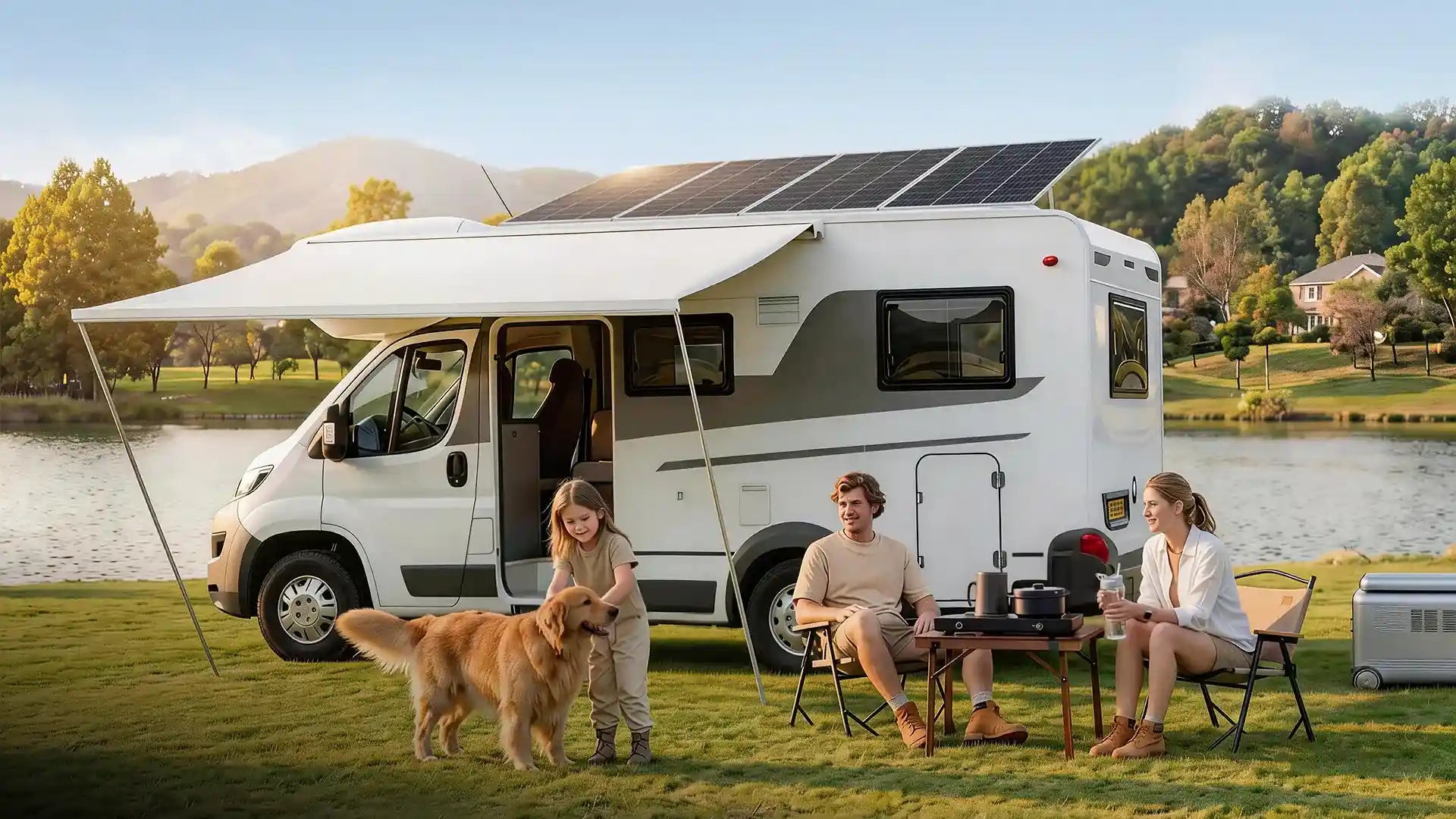

Building an RV solar system requires careful planning to ensure you meet the energy demands of your specific RV setup, whether it's a Jeep, Truck Bed, Class A, Class B, Class C, or a Travel Trailer. Solar energy offers a sustainable, reliable, and flexible power solution, especially when you're off the grid or traveling in remote locations. This guide will walk you through how to build a comprehensive RV solar system, focusing on optimizing energy efficiency, reducing weight, and ensuring ease of installation.
Understanding Your RV's Electrical Load
One of the first steps in designing an efficient RV solar system is determining the power requirements of all your appliances and devices. Based on your RV model, each type of vehicle will have different power needs. Here's a breakdown of typical energy consumption for several key devices across various RV types.
Typical Electrical Loads by RV Type:
|
RV Type |
Power Consumption |
Daily Power Use(Estimate) |
|
Jeep / Tacoma / Truck Bed |
12V Fridge (50W), Vent Fan (8W), Laptop (70W) |
4910Wh/day |
|
RV-Class A |
Rooftop AC (1200-2500W), RV Fridge (120W), Microwave (900-1500W) |
1951Wh/day |
|
RV-Class B |
Starlink (75-100W), RV Fridge (80-200W), Vent Fan (10-50W) |
5737Wh/day |
|
RV-Class C |
RV Fridge (80-200W), Rooftop AC (1200-2500W), Microwave (900-1500W) |
11787Wh/day |
|
RV-Travel Trailer |
RV Fridge (80-200W), Rooftop AC (1200-2500W), Microwave (900-1500W) |
14217Wh/day |
Key Appliances in an RV Solar Setup:
Refrigerator: 80–200W for typical RV fridges (120W avg.)
Air Conditioning: 1200–2500W depending on model and usage.
Microwave: 900–1500W when in use for short bursts.
Vent Fans: 10–50W for ventilation.
Lights: 5–30W per light (LED lights are highly efficient).
Laptop: 40–120W for charging.
Key Takeaway:
Knowing your total daily power consumption (based on your RV type and specific appliances) is essential for determining the number of solar panels and battery capacity you'll need.
Charging, Parking, and Solar Power Combinations
A successful RV solar system relies on a combination of charging methods, including driving power, solar power, and shore power. These methods work together to keep your RV powered while on the road or stationary.
a. On-the-Road Charging (Driving)
When driving, your RV's alternator charges the battery bank through a DC-DC charger. This is a convenient way to keep your batteries topped off during long drives.
Powering Options: This method will power small devices like laptops, lights, and 12V fridges. It is especially useful for ensuring that your battery is ready when you stop for the night.
b. Shore Power (When Parked)
When stationary, shore power or a generator provides the easiest and most consistent power source for high-demand appliances, like air conditioners or microwaves, which require more energy.
c. Solar Power (Off-Grid Charging)
Solar panels will charge your battery bank during daylight hours. The size of your solar array depends on your daily energy consumption and the amount of sunlight available in the region you are traveling.
Tip: Depending on your RV's daily consumption, you'll likely need around 300W-1000W of solar panels to ensure sufficient energy supply during the day.
Choosing the Right Voltage System: 12V, 24V, or 48V?
The voltage of your system will play a critical role in its efficiency and capacity. Here's how each voltage type compares for RV solar systems:
a. 12V Systems
Best for smaller RVs or basic setups.
Common in most RVs, especially for basic lighting, 12V fridges, and small electronics.
However, there is greater energy loss over long distances compared to higher voltage systems.
Recommended for: RVs with basic power needs, such as Jeep / Truck Bed or Class B RVs, where you use small appliances like lights, fridges, and laptops.
b. 24V Systems
Best for mid-range RVs with moderate power needs.
More efficient than 12V because it reduces current and power loss.
Ideal for slightly larger power demands, like microwaves and small air conditioners.
Recommended for: Class C RVs or RV Travel Trailers with medium power demands like microwaves or air conditioners.
c. 48V Systems
Best for larger RVs with high power demands.
Most efficient for handling larger systems, ideal for large AC units or running multiple devices simultaneously.
However, these systems can be more expensive and require specialized equipment.
Recommended for: Large RVs like Class A or Class C with high-power needs, such as rooftop ACs or multiple large appliances.
System Design Considerations: Efficiency, Weight, and Installation Ease
a. Maximizing Efficiency
Given the limited roof space on an RV, choosing high-efficiency panels (e.g., monocrystalline) is essential to maximize energy output per square foot. This is especially important for larger RVs or those with higher energy demands, like Class B and Class C RVs, which require more energy for microwaves and air conditioning.
b. Weight Considerations
The weight of the solar system directly impacts the fuel efficiency and handling of your RV. Choose lightweight lithium batteries and solar panels to reduce weight while maintaining performance.
c. Ease of Installation
When choosing your system, consider opting for pre-packaged solar kits designed specifically for RVs. These kits typically include everything needed for DIY installation, such as mounting brackets, controllers, and wiring.
Building Your RV Solar System: Step-by-Step
To design the perfect RV solar system, follow these steps:
1.Calculate Your Daily Power Usage: Use the electrical loads table above to calculate your daily energy consumption based on your RV type and appliances.
2.Choose the Right Solar Panel Size: For example, an RV with 5000Wh/day (such as a Class B RV) may need 1000W of solar panels to meet daily energy needs in sunny conditions.
3.Select Battery Storage: For an RV with 5000Wh/day consumption, you'll need at least 24v 100Ah of battery storage to power your system overnight.
4.Pick the Voltage System: Based on your power needs and the complexity of your RV, choose between 12V, 24V, or 48V for your system.
5.Install the System: Follow the included instructions for mounting your solar panels, connecting your charge controller, and wiring the system to the battery bank and inverter.
Conclusion: Power Independence on the Road
Building a complete RV solar system for camping and travel will provide you with the energy independence to go off-grid and enjoy the great outdoors without compromising on comfort. Whether you're traveling in a Jeep, Class A RV, or Travel Trailer, the right solar setup can keep your appliances powered and your adventures uninterrupted. With careful planning, you can build an efficient, reliable, and lightweight system that ensures a seamless travel experience.