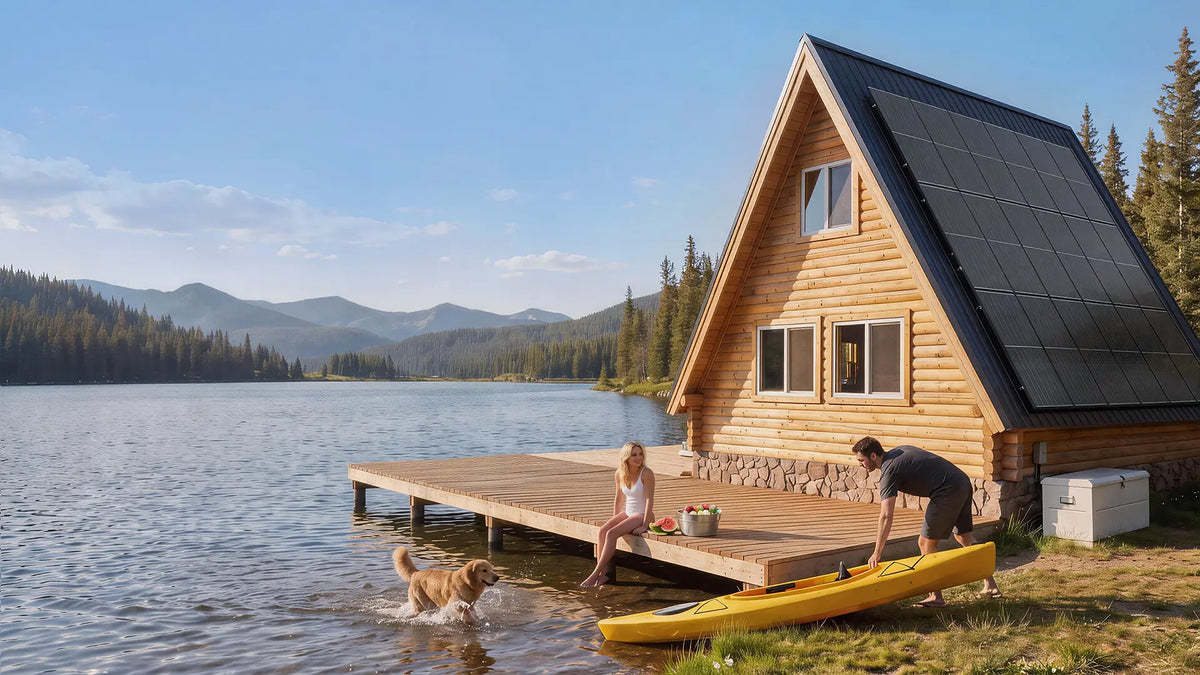

For many people in North America, a forest cabin is not about running a full suburban lifestyle deep in the woods. It is about quiet weekends, seasonal escapes, hunting trips, remote work retreats, or simple long-term living with fewer dependencies.
That is why designing off-grid cabin electricity is very different from designing a full-size residential solar system. A small cabin does not need central air conditioning, electric dryers, or multiple refrigerators running nonstop. Instead, the goal is reliable daily power for essentials: lighting, cooking support, communication devices, and basic comfort during all seasons.
A properly planned cabin solar power system can comfortably support modern off-grid living while staying efficient, affordable, and easier to maintain.
Why Forest Cabins Need a Different Solar Approach
One of the biggest mistakes people make when planning forest cabin solar systems is sizing the system like a traditional house.
Most cabins have:
Smaller square footage
Lower daily power consumption
Intermittent occupancy
Seasonal use patterns
Limited roof space
More challenging winter sunlight conditions
In heavily wooded regions across Canada, the Pacific Northwest, the Rockies, Alaska, or northern U.S. states, solar production can vary dramatically between summer and winter. Trees, snowfall, and shorter daylight hours all affect performance.
Instead of chasing maximum power output, the best off-grid cabin systems focus on:
Energy efficiency
Battery reserve capacity
Load prioritization
Reliable everyday operation
Weather redundancy
That starts with understanding your actual daily loads.
Typical Power Needs for an Off-Grid Forest Cabin
A small cabin can often run comfortably on surprisingly little electricity if appliances are chosen carefully.
Here is a realistic example of a moderate-use cabin load profile.
Example Daily Cabin Load Table:
|
Device |
Power Draw |
Daily Usage |
Daily Consumption |
|
LED cabin lighting |
40–100W |
5–6 hrs |
200–600Wh |
|
Phone charging |
10–20W |
2–3 hrs |
20–60Wh |
|
Laptop computer |
45–100W |
4–8 hrs |
200–800Wh |
|
Portable radio / Starlink / router |
20–75W |
6–24 hrs |
120–1800Wh |
|
Small DC fridge |
40–80W average |
24 hrs |
800–1500Wh |
|
Electric kettle / coffee maker |
800–1500W |
Short bursts |
150–400Wh |
|
Induction cooktop |
1200–1800W |
Limited cooking |
300–1200Wh |
|
Vent fan |
20–40W |
4 hrs |
80–160Wh |
|
Diesel heater fan / ignition |
20–60W |
Seasonal |
100–400Wh |
|
Heated blanket |
80–200W |
Winter nights |
300–1000Wh |
For many weekend cabins, total daily consumption stays between:
1.5kWh–3kWh/day for minimal setups
3kWh–6kWh/day for comfortable living
6kWh–10kWh/day for long-term occupancy with cooking and refrigeration
This is dramatically lower than a typical grid-connected American home, which often exceeds 25–30kWh per day.
Choosing the Right Off-Grid Cabin Solar System Size
The right system depends less on cabin size and more on lifestyle.
1.Weekend Escape Cabin
Best for:
Hunting cabins
Fishing camps
Seasonal retreats
2–3 day stays
Typical usage:
Lights
Phones
Radio
Laptop charging
Small water pump
Occasional cooking support
Recommended System
Solar array: 800W–1.5kW
Battery storage: 2kWh–5kWh LiFePO4
Inverter: 1000W–2000W pure sine wave
This setup works well for light-duty solar for tiny off-grid homes and cabins where heavy appliances are avoided.
Gas or propane often handles:
Space heating
Water heating
Major cooking loads
This significantly reduces electrical demand.
2. Comfortable Short-Stay Cabin
Best for:
Extended weekends
Family cabin trips
Seasonal living
Hybrid remote work
Typical usage:
Refrigerator
Multiple lights
Laptop and internet
Coffee maker
Occasional induction cooking
Ventilation
Heating assistance
Recommended System
Solar array: 2kW–4kW
Battery storage: 5kWh–10kWh
Inverter: 3000W–5000W
This is one of the most common configurations for modern off-grid cabin electricity in North America.
A properly sized 48V LiFePO4 battery bank gives:
Better inverter efficiency
Lower cable losses
Improved cold-weather performance
Easier future expansion
3. Long-Term Solo Cabin Living
Best for:
Remote full-time living
Long winter occupancy
Off-grid retirement
Deep forest homesteads
Typical usage:
Full refrigeration
Consistent internet
Daily cooking
Water systems
Heating support equipment
Small workshop tools
Recommended System
Solar array: 4kW–8kW
Battery storage: 10kWh–20kWh+
Inverter: 6000W+ split-phase if needed
These systems are designed for year-round reliability rather than minimum upfront cost.
In northern climates, winter solar production may drop 50–70% compared to summer, so larger arrays and battery reserves become critical.
How to Size Battery Storage for Cabin Solar
Battery sizing is often more important than panel wattage in forest environments.
Cabins experience:
Snow coverage
Cloudy stretches
Tree shading
Limited winter sunlight
A system that works perfectly in July may struggle badly in December if battery reserve is too small.
A Good Rule for Off-Grid Cabins
Plan for:
2–3 days of autonomy for moderate climates
3–5 days of autonomy for northern forests or winter-heavy regions
Example:
If your cabin uses:
4kWh/day
Then battery reserve should ideally be:
8–12kWh minimum
15–20kWh for winter reliability
This prevents deep battery cycling during storms and improves long-term battery lifespan.
Winter and Cloudy Weather Considerations
Forest cabins face unique winter challenges.
1. Shorter Sun Hours
Northern U.S. and Canadian regions can drop below:
3–4 peak sun hours/day in winter
That dramatically affects charging performance.
2. Tree Shading
Tall pine or cedar forests create:
Morning shading
Early sunset loss
Seasonal shading changes
In many cabin locations, careful panel placement matters more than adding extra panels.
Ground mounts often outperform roof mounts in wooded areas because they allow:
Better sun positioning
Easier snow clearing
Seasonal tilt adjustment
3. Snow Accumulation
Steeper panel tilt angles help snow slide off naturally.
Many off-grid cabin owners use:
35°–60° winter tilt angles
Adjustable ground racks
Bifacial panels for reflected snow gain
Snow reflection can slightly improve winter generation under clear conditions.
Heating and Cooking: What Solar Can Realistically Handle
One of the biggest misconceptions about forest cabin solar is expecting solar alone to handle all heating loads economically.
In most North American off-grid cabins:
Solar Works Well For:
LED lighting
Electronics
Refrigeration
Water pumps
Vent fans
Heated blankets
Diesel heater support systems
Light cooking appliances
Propane, Wood, or Diesel Usually Handle:
Space heating
Water heating
High-power cooking
Clothes drying
This hybrid approach keeps solar systems far more practical and affordable.
Trying to run full electric heating from solar alone in winter can multiply system cost several times over.
Why LiFePO4 Batteries Are Becoming Standard
Modern cabin solar power systems increasingly use LiFePO4 batteries because they offer:
Longer lifespan
Deep discharge capability
Low maintenance
Better inverter compatibility
Higher usable capacity
Stable voltage output
Compared to lead-acid batteries, LiFePO4 systems:
Recharge faster
Lose less usable capacity
Require less maintenance
Perform better for intermittent cabin use
For cabins that may sit unattended for weeks, lithium systems are especially convenient.
Building a Reliable Off-Grid Cabin Lifestyle
The most successful off-grid cabin owners usually do not start by maximizing power consumption.
They start by optimizing efficiency.
That includes:
LED lighting
DC refrigerators
Efficient laptops
Propane heating
Smart cooking habits
Battery monitoring
Seasonal energy planning
A well-designed solar for tiny off-grid homes setup can provide years of dependable operation while maintaining the simplicity that makes cabin life attractive in the first place.
The goal is not recreating suburban energy consumption in the woods.
The goal is building a reliable, quiet, self-sufficient system that supports the way you actually live.